
If you are seeking guidance on learning Arabic, you have come to the wrong place. But if you’d like Lessons in Arabic, as in the wonderful novel Lessons in Chemistry, then perhaps I can be of assistance.
You see, I failed my beginner’s Arabic test.
Yes, failed.
Plugged.
Three weeks after the dreaded online test however, I am both consoled and buoyed by the many positives gleaned from this so-called failure of mine.
Just as the main character in Bonnie Garmusa’s book becomes an unlikely cooking-show host (she’s a chemist) and succeeds, despite many flaws, so I became an unlikely student of Arabic.
And while I will never be the “poster child” for learning Arabic, much was learnt …
Before I share these life lessons, some context.
Arabic is hard
As languages go, Arabic is ranked in the “highly difficult” category.
And that’s more so for English speakers.
It has:
- Sounds you have never heard (though I am grateful for guttural Afrikaans words)
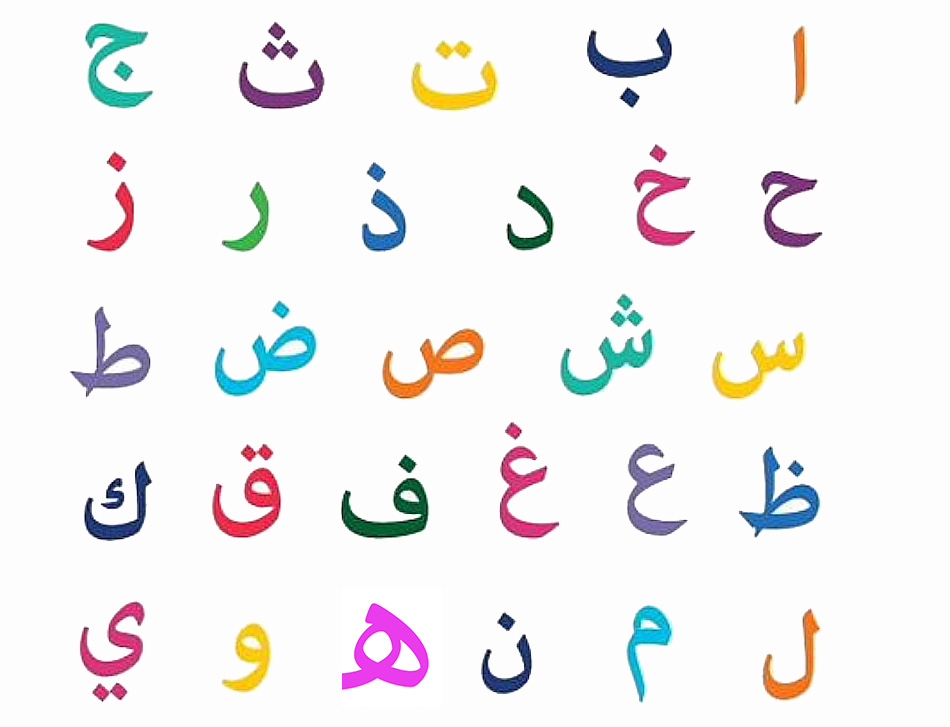
- 28 letters that look nothing like those in the English alphabet, and which morph into new shapes dependent on where they are used in a word!
- A script that is read from right to left (except for its numbers which are read from left to right, as we English speakers do)
- No capital letters
- A different sentence construction
- Feminine and masculine words and rules
- Only three vowels, and
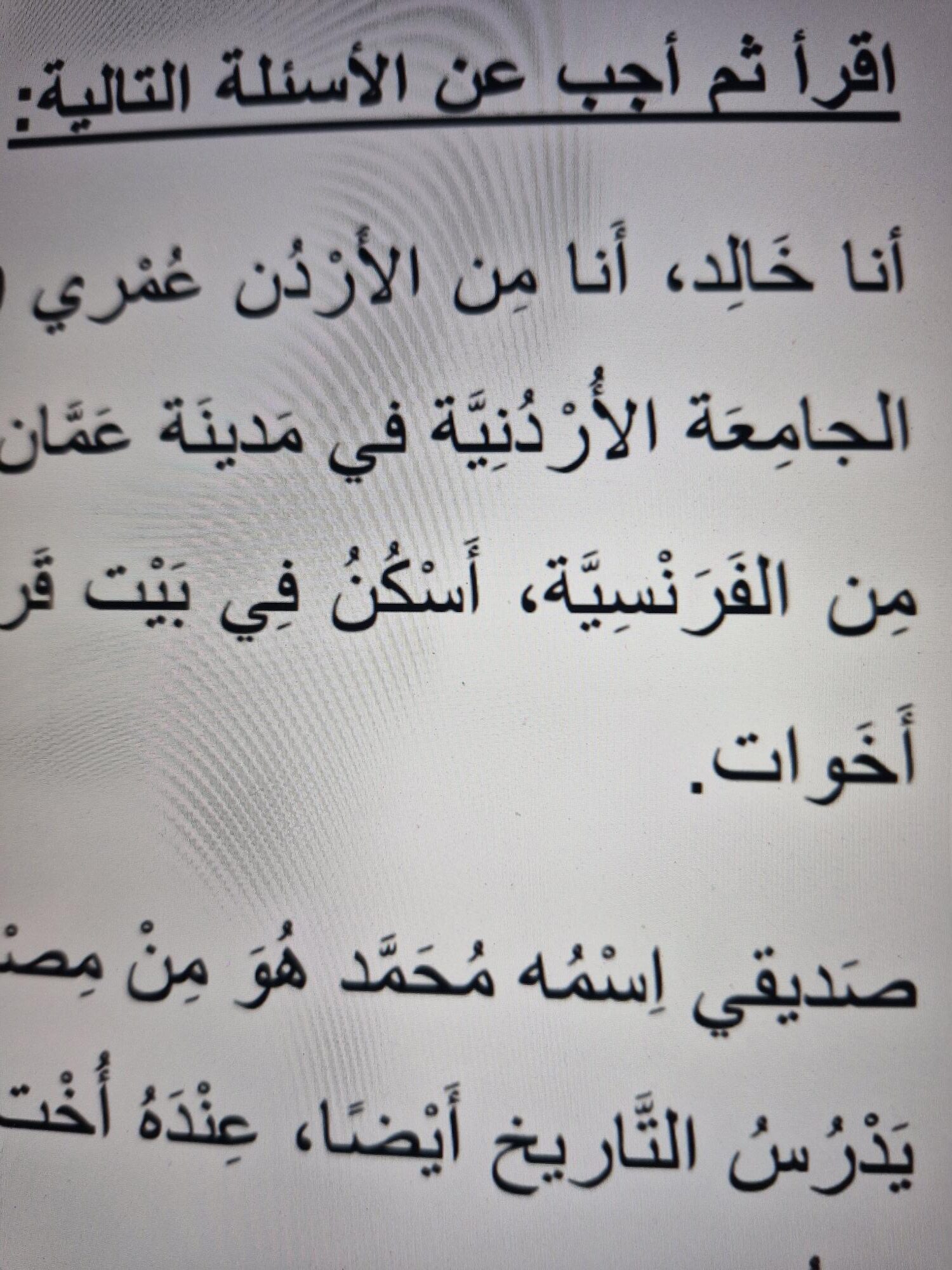
- Dots, shaddas, hamzas and other squiggles that change everything dependent on their placement
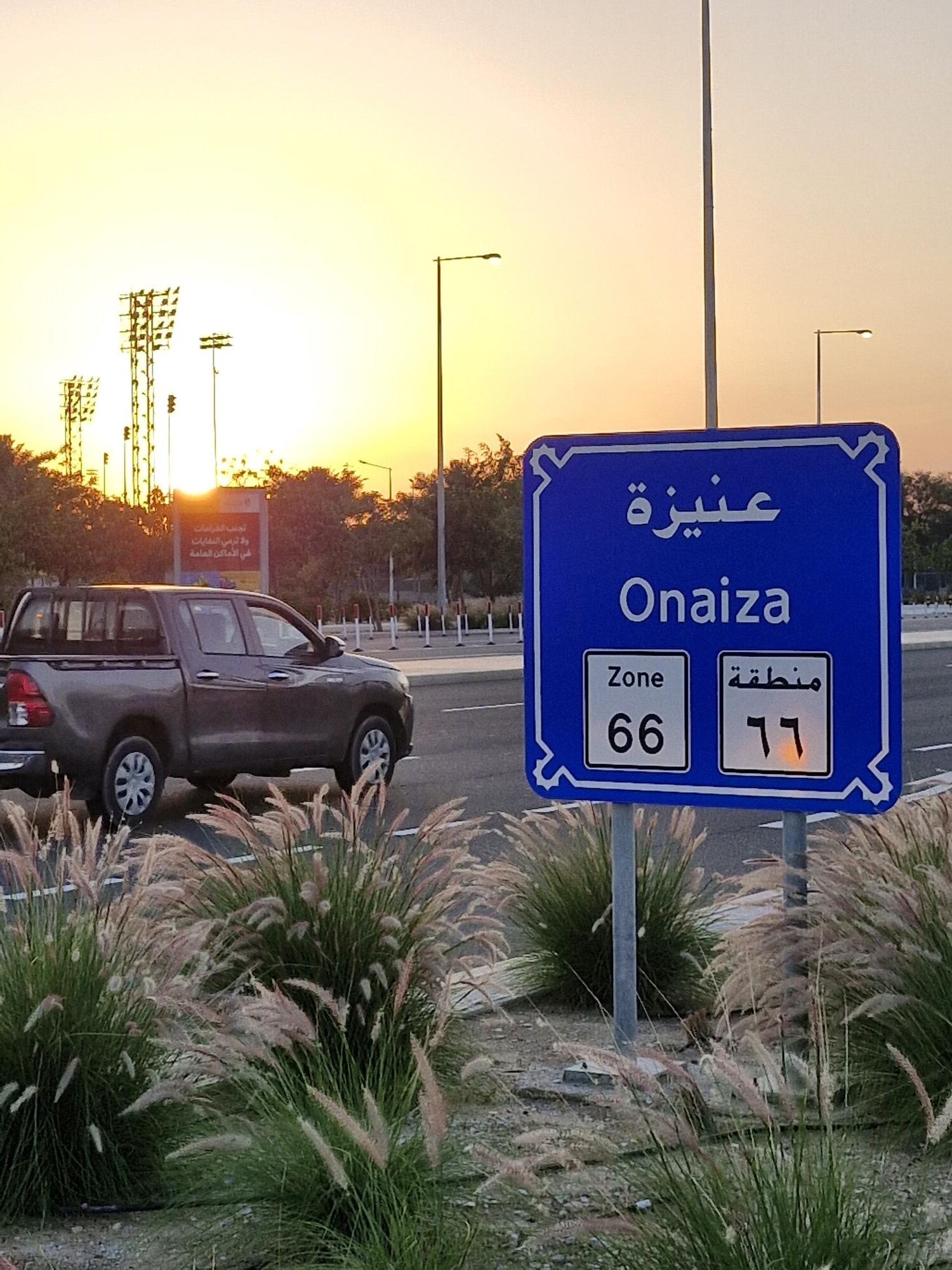
Arabic is hard; darn difficult. Or to be more exact, صعب, which is pronounced saeb. (This is one Arabic word I can say with confidence!)
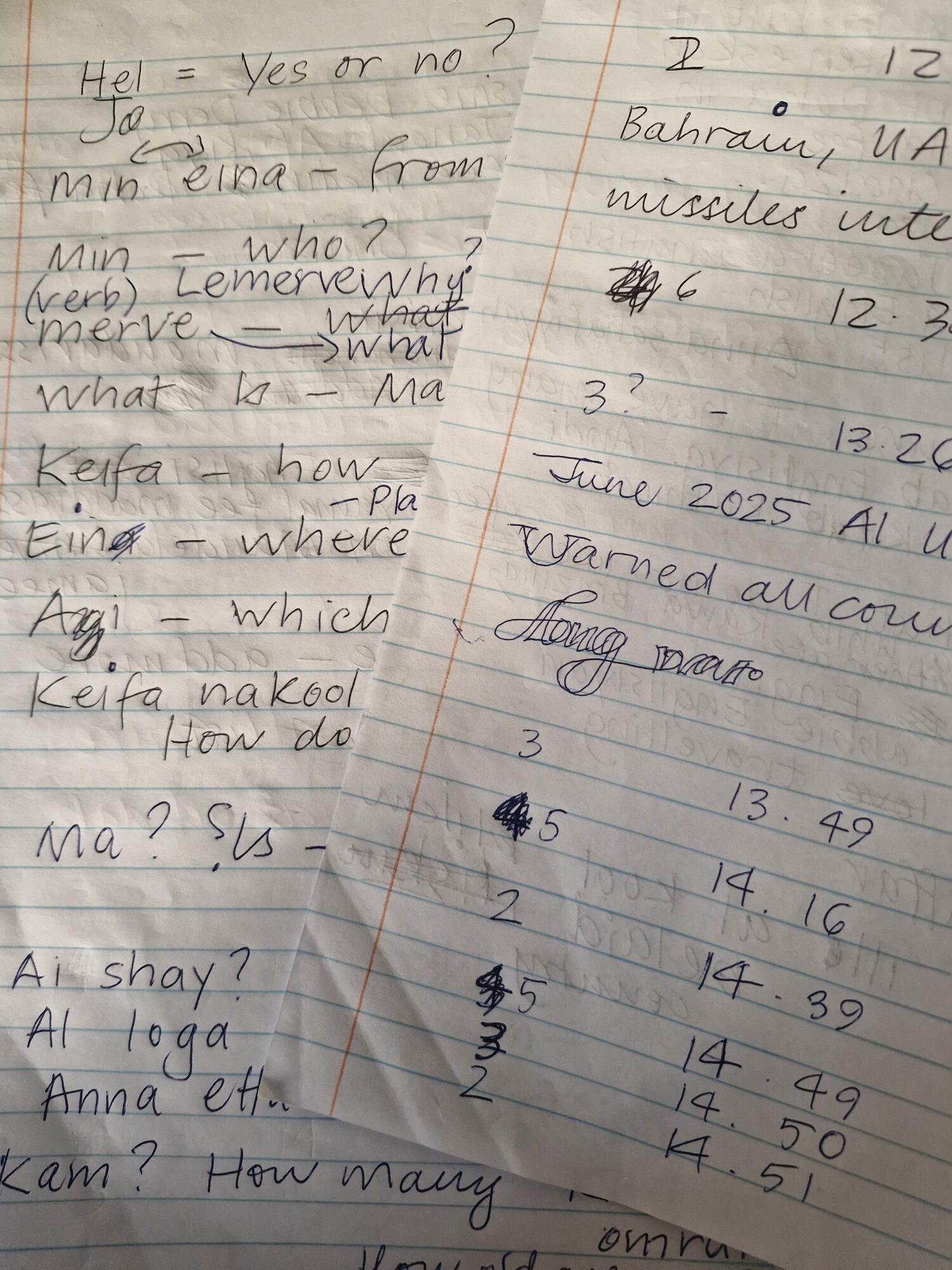
And, as if to add insult to injury in trying to learn a new language, there were missiles whizzing overhead. This does not make for a conducive study environment!
(If you’d like to read more about the early days of the US Israel war on Iran, and its impact on those caught in the crossfire, please check out my earlier posts about living and adapting to a war that is not yours.)
Other interesting Arabic facts
By way of additional background, Arabic is spoken by over 422 million people, making it the fifth most spoken language worldwide.
It has a massive vocabulary of over 12 million words (at least 160 alone for camels), at least 30 different dialects and two versions – classical and Modern Standard, with the former more formal version found in the Qur’an and ancient Arabic literature.
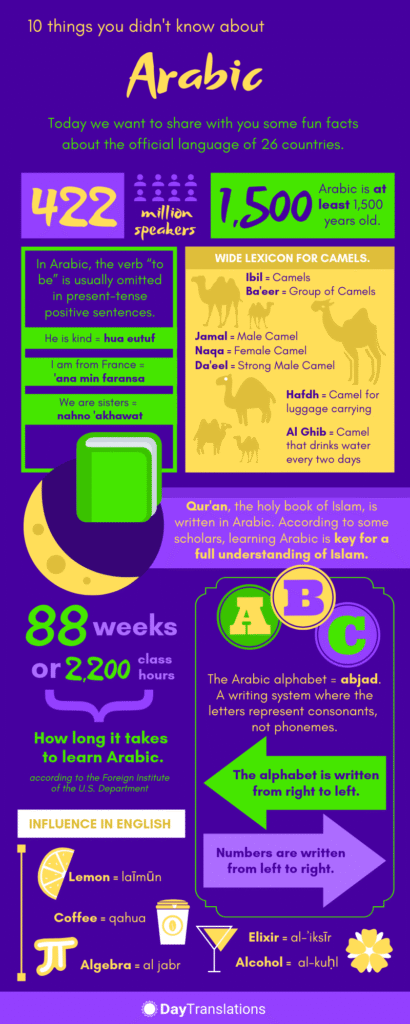
Many English words find their roots in Arabic as you will see from the above graphic.
So now you know the what, here’s my why.
Why study Arabic?
Why study Arabic?
Well, I live in the Qatar in the Middle East for starters. I am surrounded by Arabic-speaking colleagues and friends.
The lessons were free – and online!
And if I am really honest, I also wanted to make good on my poor track record with languages.
You see, I only dabbled with French and Latin as a pre-teen in the UK before leaving for South Africa. In high school in Mzansi, I chose typing over isiXhosa. Then I scraped through Afrikaans in Matric.
But since English is spoken everywhere, I held the misguided and conceited belief that I had no need to learn another language.
Older and wiser, I now know better!
Learning Arabic would also be a chance to redeem myself.
Good intentions
And so, against this backdrop, I began my hour-long, thrice-weekly online lessons with 15 other colleagues.
I had such good intentions; such high hopes …
Really? Sahihun?
I won’t bore you with the details – details of which gave me sleepless nights.
Let’s just say, the quantity, quality and foreignness of it all, was simply TMI – Too Much Information. My brain simply couldn’t absorb it all.
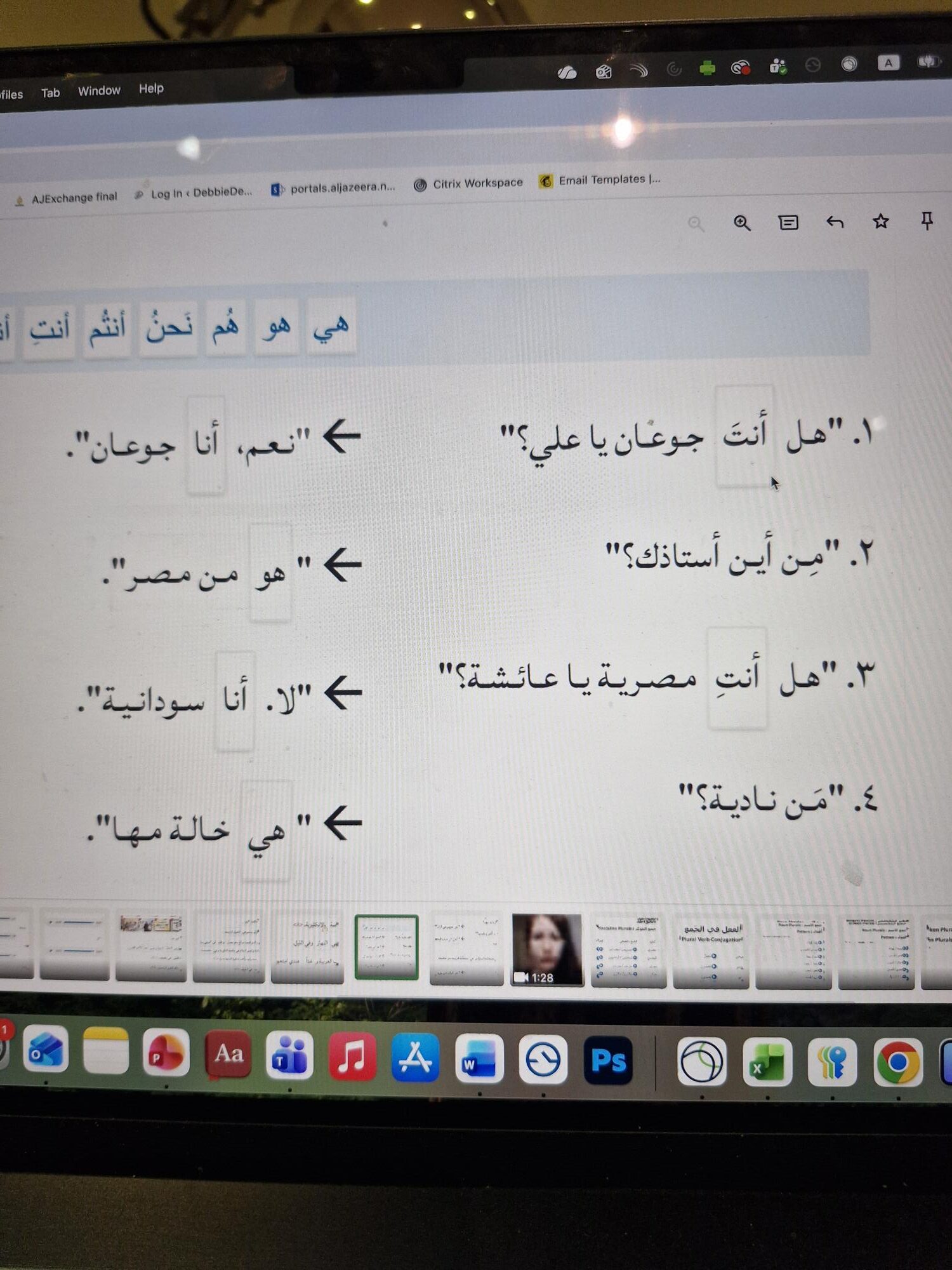
Of course, there’s was no problem with Arabic and my sub conscious! I dreamt of flying alifs, harakat, tamarbuta and the like … My inability to remember and pronounce new words kept me awake, too.
My work friends were equally well intentioned – helping and encouraging me.
But since they come from Syria, Sudan, Palestine, Jordan and Egypt, they unwittingly multiplied my confusion by providing their version of every new word! I am told that Moroccan Arabic is the most difficult and confusing of all Arabic dialects.
They also questioned why I was learning formal Arabic? How would I know?
I simply wanted to get to grips with some conversational Arabic.
I was often reminded of my friend, Bev, who when faced with such daunting opportunities would announce: “I’d rather stick rusty pins in my eyes …”
Outcomes – and some
All formalised education has learning outcomes. This online Arabic class had them, too. But they simply didn’t align with my personal hopes.
While I have no doubt I failed in the conventional sense (the results have not yet been shared), I am happy with what I have managed to date.
And, I have new friends as well. Only two, mind you, because only three of the original 15 online classmates made it to the end of the three-month course.
Yes, I told you it was hard!
I have also since learnt that learning Arabic generally takes about 2 200 hours of study over 18 months to three years to reach fluency for English speakers! That’s the equivalent of 20 hours a week of consistent practice.
Our course ran for over 30 hours – or three hours a week, along with our own self-study. This I dutifully undertook, totting up an additional five hours a week.
All told, the eight hours of practice a week was still well short of the 20 hours recommended to become fluent within three years!
I have been consoled by this.
Lessons in Arabic
I am also comforted by the many lessons outside of learning Arabic, as hard as many of them were.
So for what it’s worth for anyone trying something new that pushes you out of your comfort zone, there are benefits!
Just ensure you put on your proverbial “big girl panties”.
Open mind. Give yourself a headstart by mentally preparing yourself to have an open mind about whatever awaits as it may not go as you imagine.
Set your own objectives. Agree with yourself as to what you’d like to achieve from the experience.
Laugh. I laughed my way through the entire three months – at how bad I was, how my pronounciation was far too English, how a dot changes everything, how I often had no idea what was going on … Laughter became a coping mechanism for me.
Staying humble. The entire process kept me humble. My perfectionist nature and pride took a knock. Arabic exposed my many limitations. It’s good to be brought “down to earth”.
Kindness. My frustrations and inability to master even basic information also taught me to be kind to myself. It gave me new-found respect for those who arrive in foreign countries and have to learn new languages.
Perseverance. I wanted to run away and laugh the whole thing off, but I hung in there – for three whole months. I am glad I did because I know so much more about Arabic (and myself) than I did before I began. With every lesson I was a little better than I had been in the previous class.
Brain stimulation. While my final test may have been found wanting, Arabic is good for the brain. According to a 2010 study, reading Arabic utilises and activates both the right and left hemispheres in the brain simultaneously. In turn, this makes the brain work harder and may increase cognitive and perceptive skills.
In other words, Arabic is good for keeping the brain healthy, especially as you age! And at 64, that is now me.
Keep on, keeping on
So if nothing else, trying to learn Arabic is keeping the grey matter from going to glue.
I am continuing my efforts, via Duolingo and other free online lessons, in growing my vocabulary, understanding and hopefully pronounciation. My Arabic friends are still urging on, too.
And maybe, just maybe, I will be able to have some basic Arabic conversations.
Indeed, the little bit I have tried has been encouraging … Faces light up and there are replies in Arabic, including mashallah, to express both delight and surprise.
And then I remember Nelson Mandela who said: “If you talk to a man in a language he understands, that goes to his head. If you talk to him in his language, that goes to his heart.”
It’s onwards and upwards from here in slaying my failed language dragons and learning what I can, while I can, during our time in the Middle East.
Yalla, yalla!

10 Responses
Well done Debbie! You’ve done such an amazing job learning Arabic, I love how you were kind to yourself and still laughing through it all. We’ll keep going.
it’s صعب, I know, but you’re doing great 👏🩷🤗
Arabic might be ‘صعب’… but your journey made it beautiful –
Loved reading this, learnt so many wonderful new tidbits of information, eg 160 words for camel! I can imagine it is hard for an English-speaking person to learn, as I am overwhelmed even looking at the script, it is beautiful but looks like it is dancing. As a calligrapher, it must be fascinatingly complicated to learn. Also, if the words go right to left, and the numbers go left to right, what do you do with a sentence that has numbers in it, eg Mandela University has 32,500 students, of which 10,000 are part-time and 22,500 full time?
Well, I say you are a brave lady, am afraid I failed, just looking at it, keep at it, am pretty sure you will eventually conquer all, well done
Huge respect, Debbie! Loved this blog. You were very brave!!
I think even learning a little of a language is to be encouraged. It’s respectful and people really appreciate our efforts.
All kudos to you for giving it a go! May you persevere and conquer! Just wondering ..is the spoken language easier to learn than the written? Have you picked up any words without being able to transcribe them? 😊
You are amazing Debbie taking on such a difficult task.With your positive attitude you will get there and you can be so proud of yourself.Well done.
Aw Debs, you are amazing! And of course you laughed your way through. Well done my friend.
Respect dear Debbie, I gave up on Malagasy and rely fully on my mission interpreters when I go to Mada…but if I stayed there maybe!