
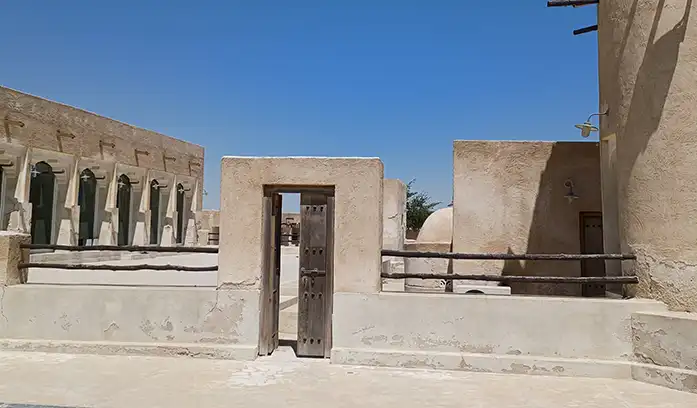
Ornate, Arabic, automatic, closed, revolving, wooden or whatever … As an expatriate living in Qatar in the Middle East, doors here can be very different.
It’s both the visual contrast between doors here and those of our home countries, and the symbolic significance.
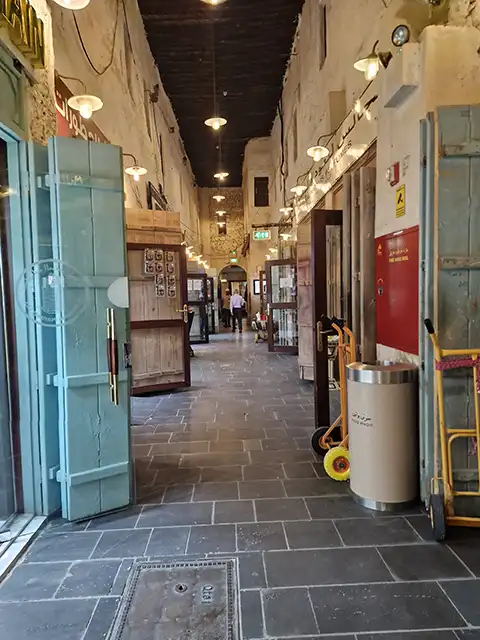
Granted, a closed door may still indicate a dead-end, a glass one transparency, ornate Arabic ones, wealth and a revolving door, movement. But the depth of meaning reaches new levels in Qatar when you are far from home.
When the metaphorical door closes here, it really closes, and that revolving one … well, it’s like a merry-go-round that never stops with the constant coming and going of people …
So, if you’re coming to Qatar, are new to the Middle East, or simply curious, please join me in examining the splendour and significance of doors, both literally and metaphorically, in Doha, Qatar.
Yes, you’ve got it. Today, we’re opening the conversation on doors or bab, which is Arabic for a door.
In the Arab world, the bab is so much more than a physical threshold. It represents hospitality, divine protection, social status and a separation of spaces.
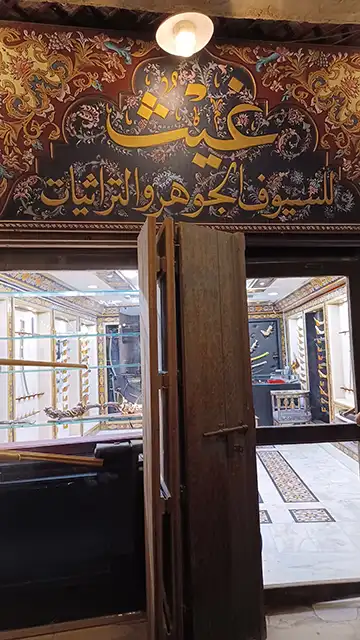
The open door
For many, Doha, Qatar, shouts “open door”. It is a country that offers outsiders’ new opportunities and/or a fresh start.
Indeed, about 88% of the 3 million people who live in Qatar today as permanent residents, are lured by job offers – be it as a top executive or a labourer.
This migrant population comes from 150 different countries and works mainly in the energy (oil and gas), infrastructure and service industries.
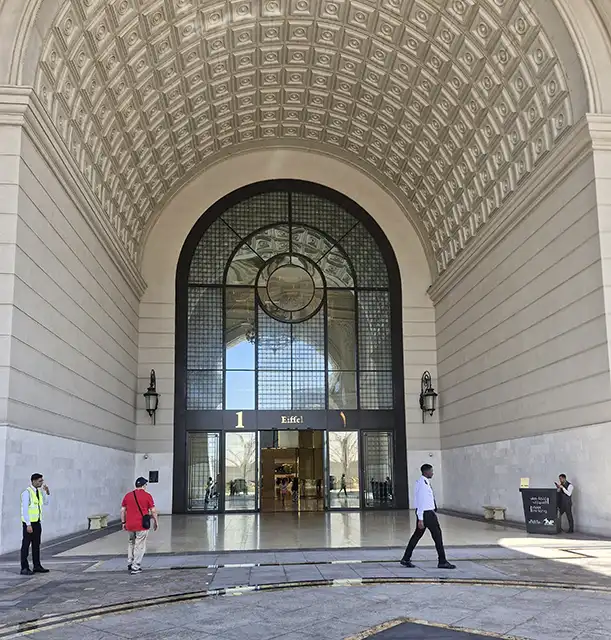
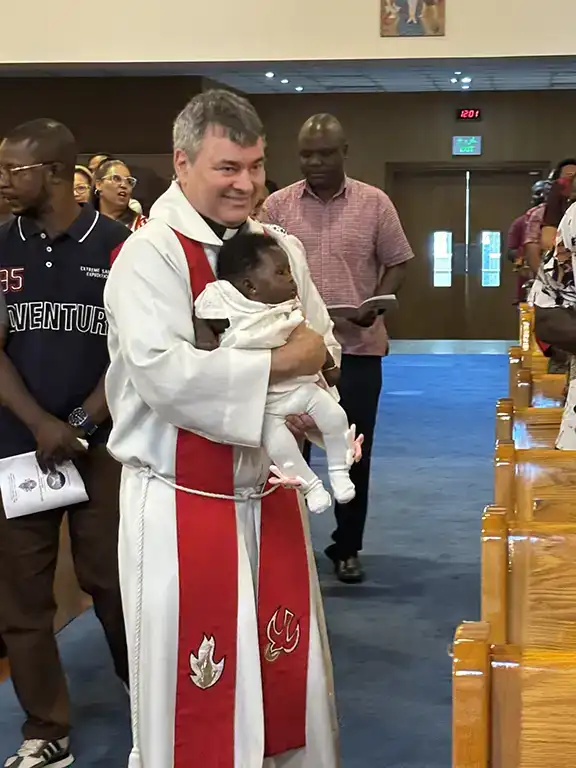
The door to Qatar opened for us after seeking God as to where we might serve Him. Ironically, He took us to a Muslim country. Qatar allows “people of the Book” to practice their faith within the confines of the Religious Complex in Doha.
The automatic door
Life is comfortable in Qatar.
It’s tax-free, safe (though, of course, that was not so when the missiles fell in March), the infrastructure is outstanding and everything works.
For me, the automated door is symbolic of this ever-so convenient lifestyle.
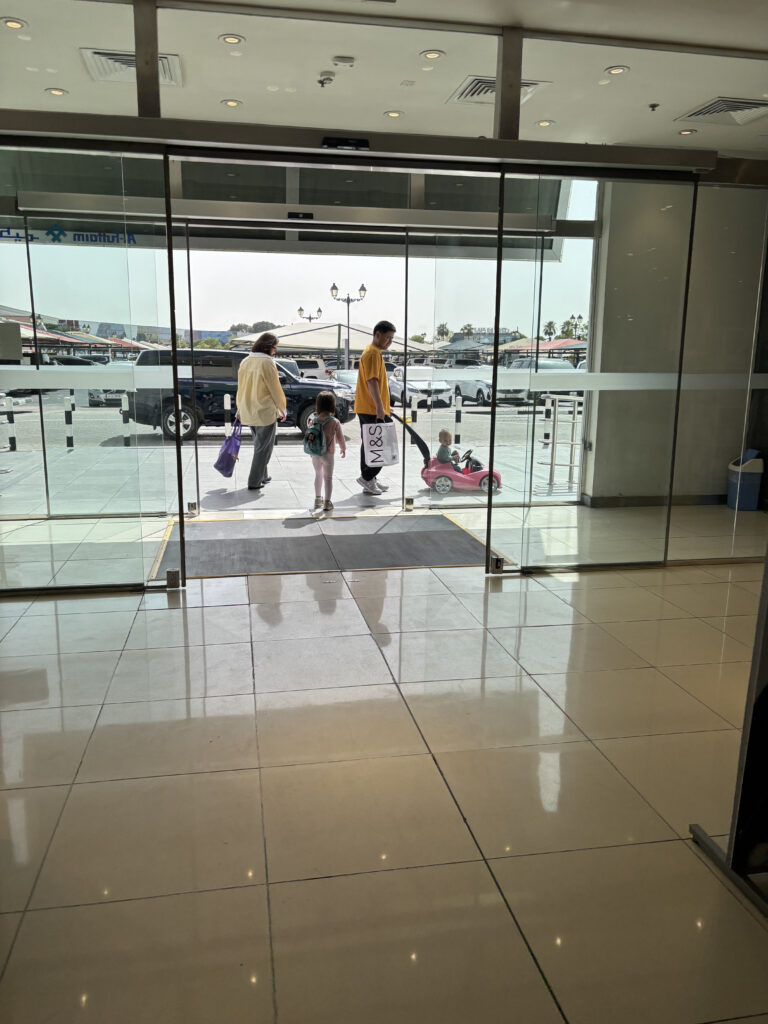
They are in shopping malls, restaurants, apartment blocks, hotels, banks, government buildings …
Just everywhere.
You stand before them and “open sesame”.
What a pleasure – doors open and close before and behind you with no effort whatsoever, allowing you to simply continue your journey.
Until one day they don’t.
You approach the door, and nothing happens. You’re taken aback. You shuffle about, expecting movement to trigger the door’s release.
Still nothing.
And then you realise. This is not an automatic door. This door needs physical involvement – a push or a pull.
This is also the moment you know you have become far too comfortable in your new-found home! (And, yes, guilty as charged.)
The unlocked door
And then there’s the unlocked door.
The what?
The unlocked door.
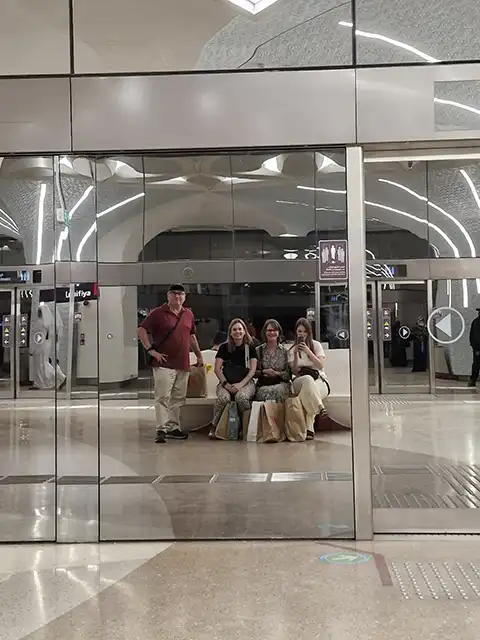
What is a completely alien concept in South Africa (and most of the world) – leaving your car, garage or house unlocked – is not uncommon in Qatar.
We’ve all seen phones, laptops, jewellery, shopping trolleys full of goodies left untouched, awaiting the return of their owners.
This is because Qatar is one of the safest, crime-free countries in the world.
We’ve done it. We’ve left doors unlocked and forgotten precious items in public places – with no negative consequences.

We love the freedom this brings and know we will miss this.
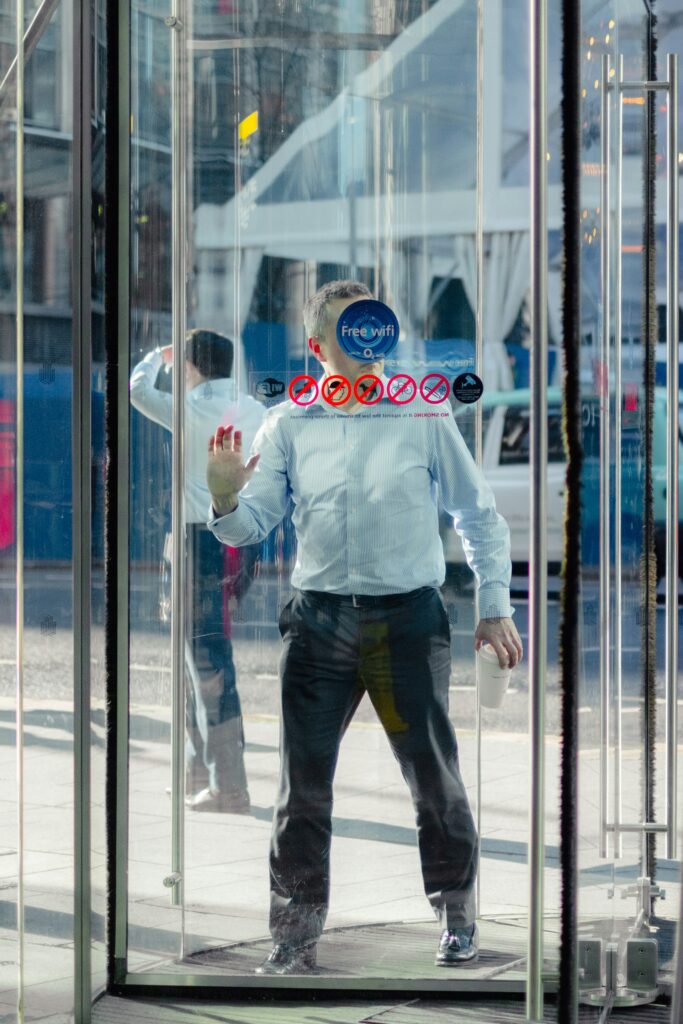
But the revolving door … for me, it’s the most challenging door of the lot.
The revolving door
In Qatar, people are forever coming and going. Reams of them.
And while this is inevitable in a country reliant on ex-patriots who must leave once their job contracts end, it doesn’t make it easy.
It is neither easy coming in the proverbial revolving door as a newcomer, entering a vastly different culture and lifestyle, nor going out as a departing expat, returning to an unchanged homeland as a changed person.
Nor is it easy for those of us left behind.
When you are far from home, friends take a significant role – often becoming the family you do not have in Qatar.
In the past six months, we have said goodbye to three families – all part of our close friendship circle. Their time in Qatar has ended and now there are empty seats at the table and a bigger void in our hearts.
Like so many expatriates, these friends had only intended to live in Qatar for a few years, but went on to stay for many, many years. In fact, one friend spent the better part of 48 years in the Gulf!
The reality of the revolving door is magnified in our workplaces and at church, with a consistent flow of welcomes and goodbyes. About a year ago, for example, the pews filled with a large number of single men from East Africa who had taken up short-term contacts as bus drivers for big sporting events in Qatar.
With their contracts having ended, few remain. The door has closed on their time in Qatar.
The closed door
Most jobs in Qatar are fixed-term contracts rather than open-ended employment.
And when these contracts of one to three years end, if they are not renewed, you must leave the country. You may be given a three-month grace period in which to find another position, but generally in Qatar no-job means no-stay.
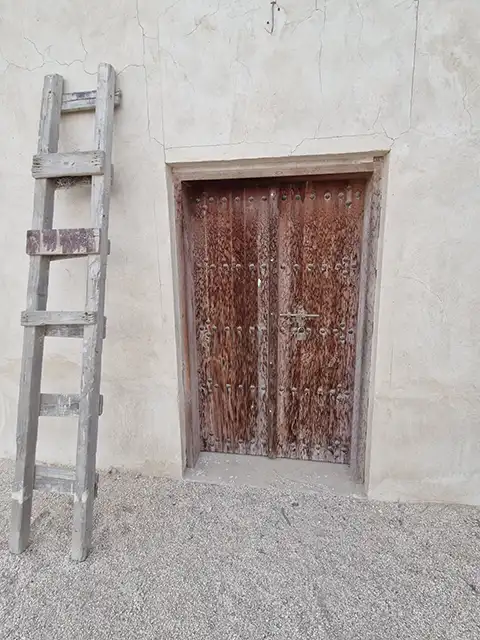
You must leave the country. The Qatar door on permanent residency closes.
Of course, the door will open again should you find a new position or be sponsored.
By way of example, I am sponsored by the H, so when his contract ends, I must leave Qatar, too, unless my employer wishes to retain my services and become my new sponsor.
This is not going to happen as we’ll both go out the revolving door together.
But when it happens (because it will), we are both going to miss Qatar – along with its beautiful Arabic doors.
The Arabic door
I love doors.
My favourite doors in Doha are the traditional ones which you can find in Souq Waqif, Katara Cultural Village, the National Museum of Qatar and the eclectic museum, the Sheikh Faisal Bin Qassim Al Thani Museum, just outside the city at Al Shahaniya. It is in the same area as the country’s famous camel racing tracks.
These doors emphasise privacy, heritage and symmetry, often functioning as grand, standalone works of art rather than simple entrances. With their bold Arabic arches and geometric patterns they are aesthetically pleasing and welcoming. Hospitality is big in the Qatari culture.
There are often also several entrances to a home, thanks to the majelis, a special area in which the man of the house can relax with this male friends.
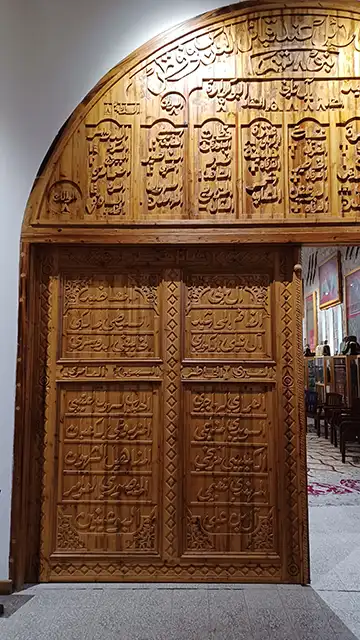
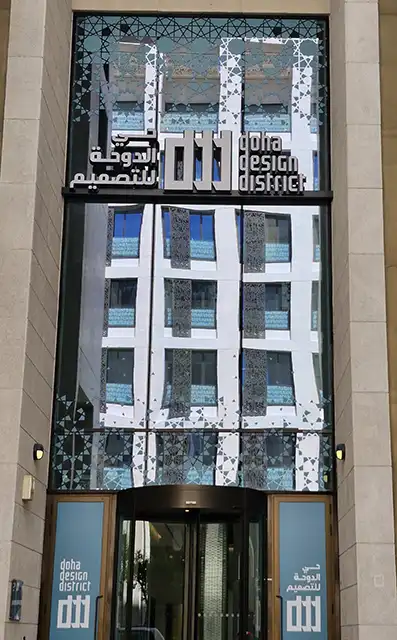
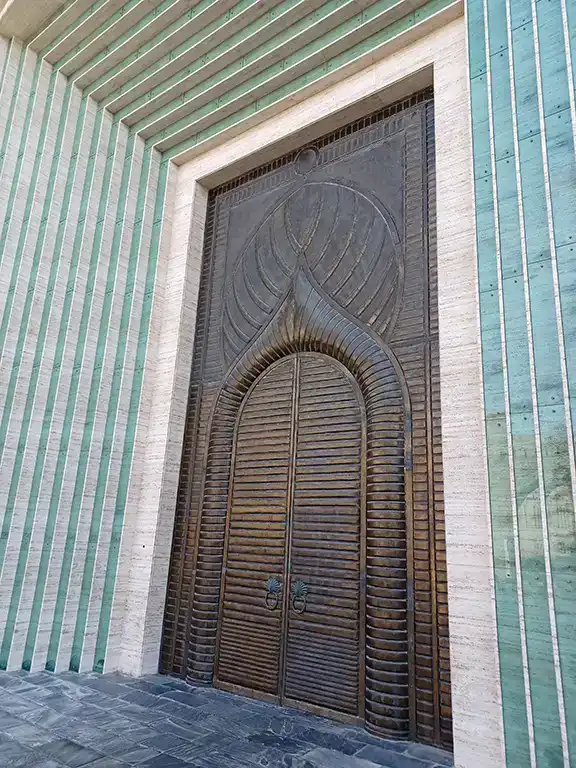
And then there are the modern-day doors in Qatar.
They are a blend of the country’s heritage and cutting-edge engineering, both decoratively pleasing and practical, serving as high-tech climate barriers against the heat and dust.

11 Responses
Thanks Debbie – a fascinating read!
A good read! What an interesting topic, I get the fascination.
Thanks so much for this interesting read,x
Fascinating and beautiful.
Interesting read as always!
Thank you Debbie. Tissues and now Doors! More interesting facts to learn about Qatar thanks to you.
Always a fascinating read, but the freedom and the cleanliness is fantastic, can’t imagine folk leaving after contract has ended, back to reality I suppose.
So interesting and so well written by you Debbie. Thank you! What a privilege to live in Qatar!
What a wonderful read, I loved the symbolism of the different doors and how they reflect the many experiences of living in Qatar. Your writing is a descriptive, thoughtful and deeply relatable for anyone who has lived away from home, (not me of course as Qatar has become home for me 🙂 ).
So well written Debbie, thank you!
Debbie this is so interesting and i just love your blogs.Learn something new each time from your blogs.Thank you.