
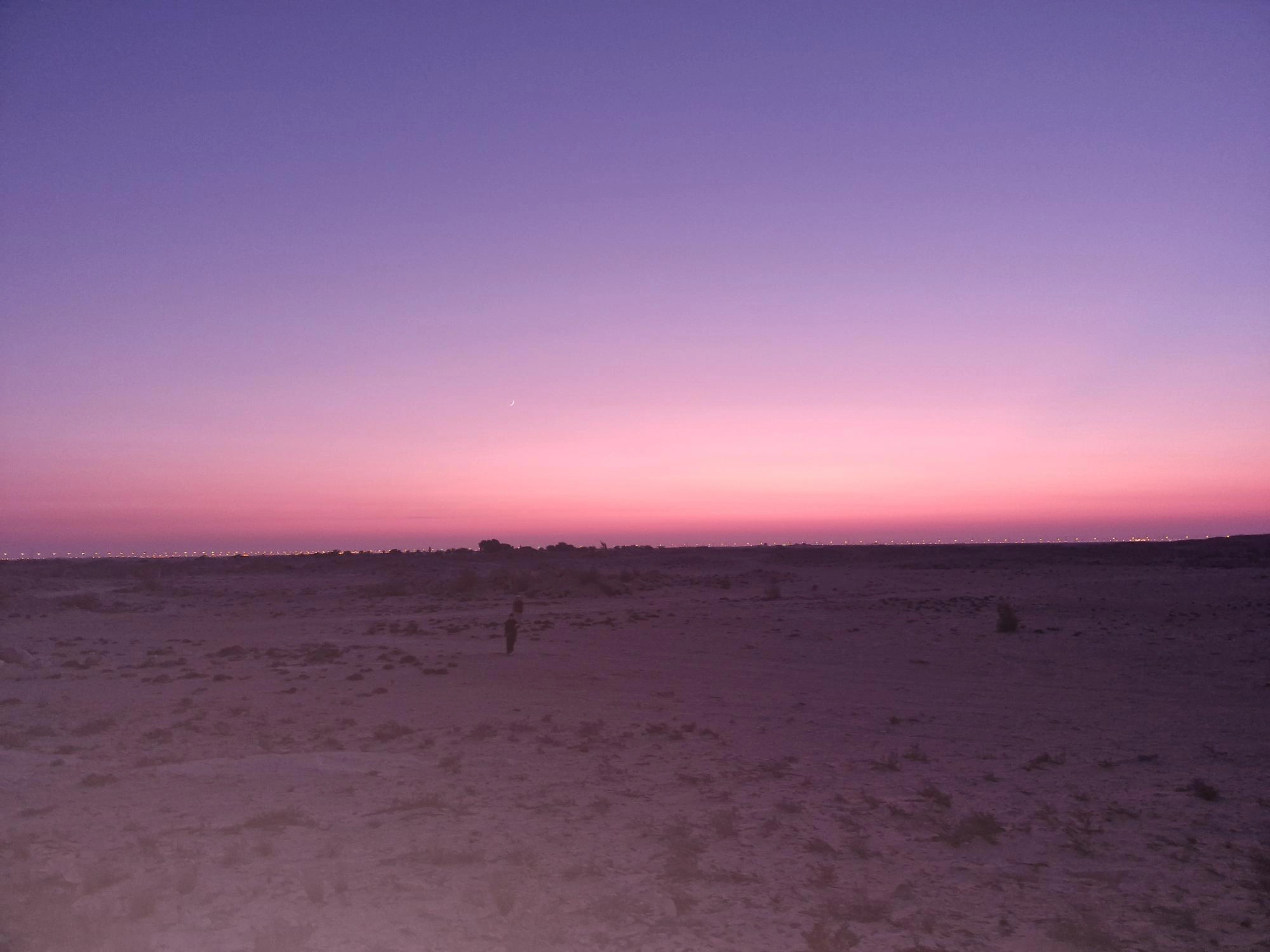
From the mundane to the mysterious, Qatar’s leading rock art site, Al Jassasiya, gives you much to see and even more to mull over.
Not least is that, at face value, with its stunning architecture, high-tech infrastructure and visionary focus, Qatar is a picture of modernity, when actually, it’s truly old – like 5th Century ancient.
And, its rock art, like rock carvings the world-over, offers insight to Qatar’s fascinating past (see Ancient Qatar section below).
Many of the 900 petraglyphs documented at the Al Jassasiya site are an enigma … a puzzle not yet solved.
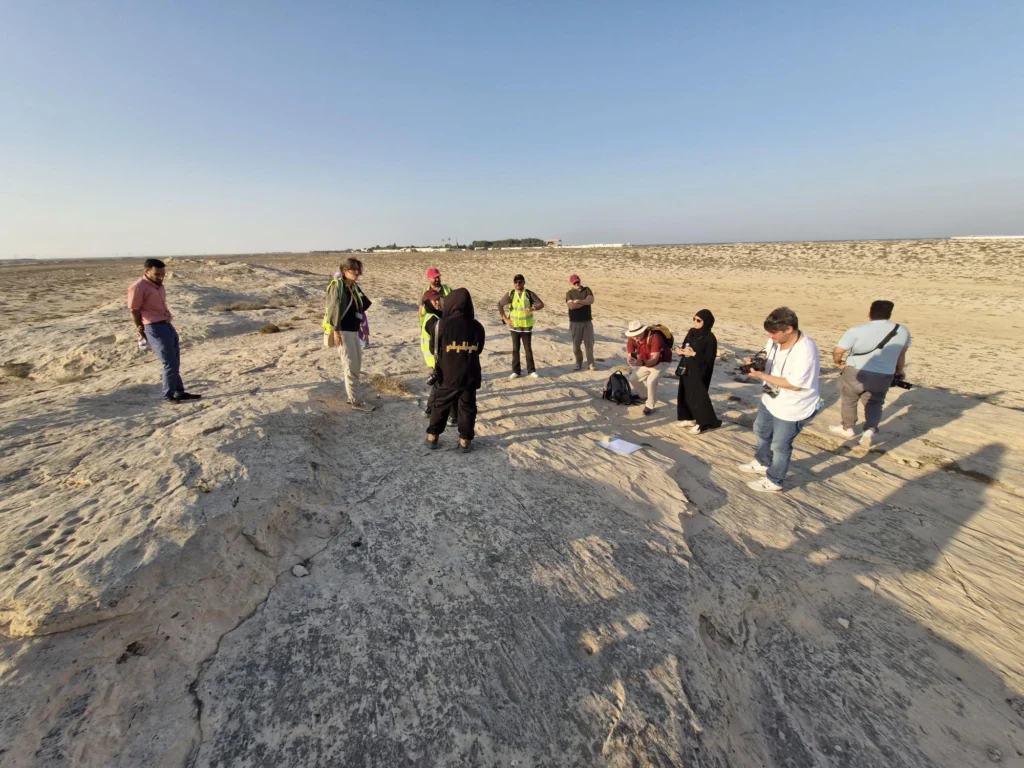
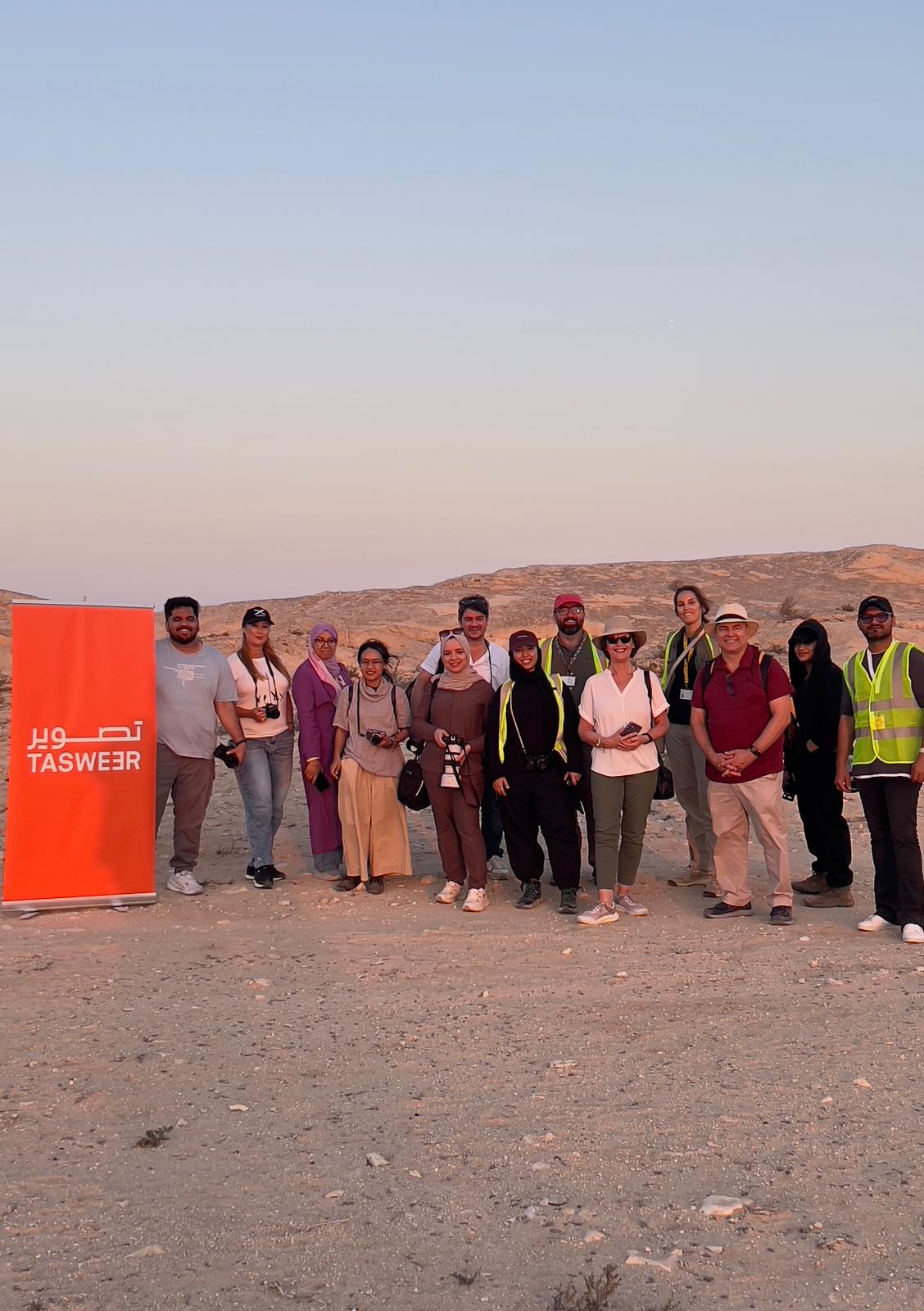
This, and more, we learnt on a photographic excusion organised by Qatar Museums and Tasweer. But it’s one you can also enjoy by taking your own hour-long self-drive to the site or, if you’re far away, by reading this post).
For other self-drives to examine art – as in magnificent sculptures – in the desert, please check out the art in the desert post.
What rock art you will see
While the 900 documented petraglyphs are open to the public, and are also presently being re-examined by archaelogists from Qatar Museums, you are likely to see only a smattering of these.
But do not let this deter you because what you will see is fascinating.
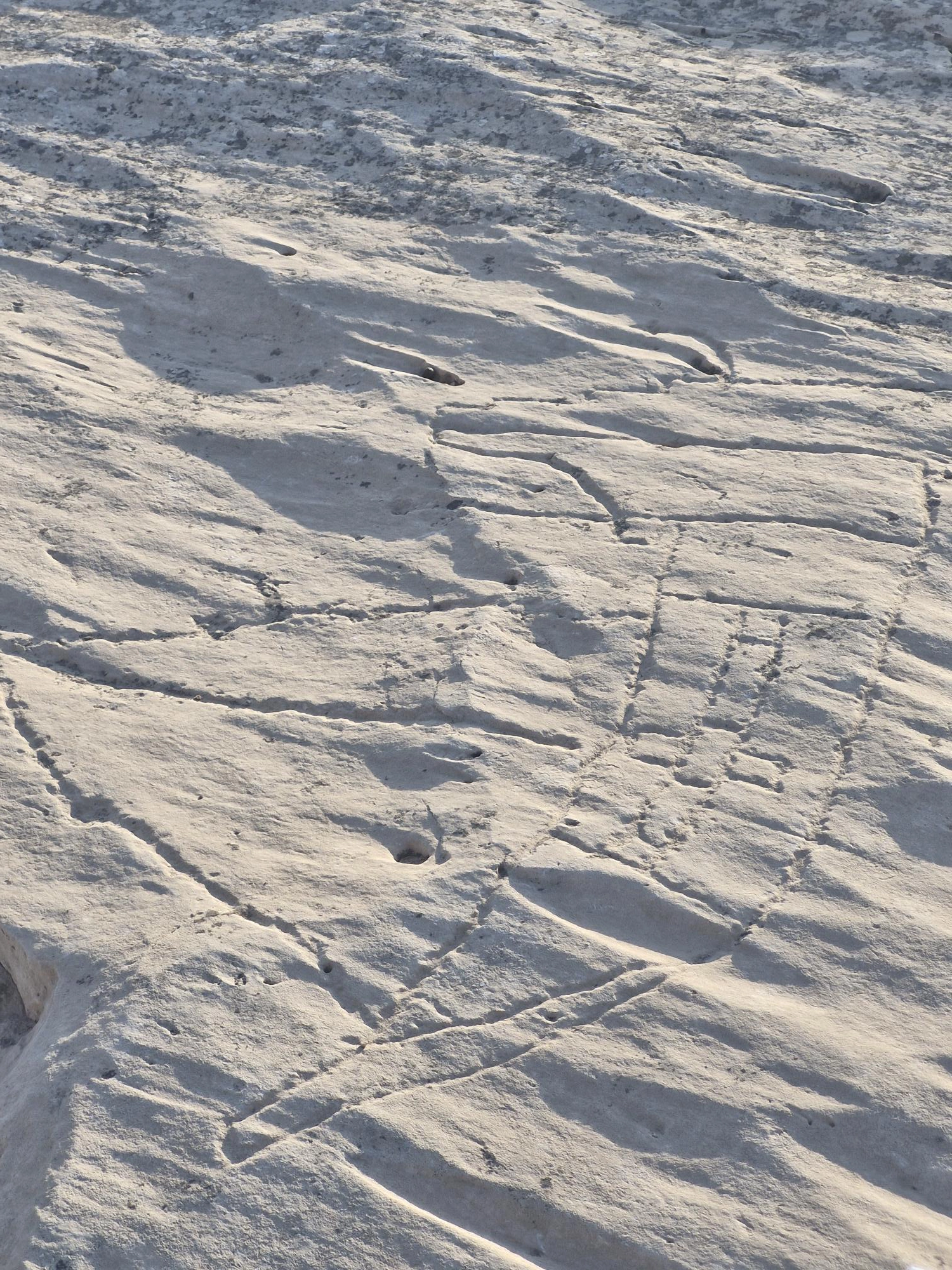
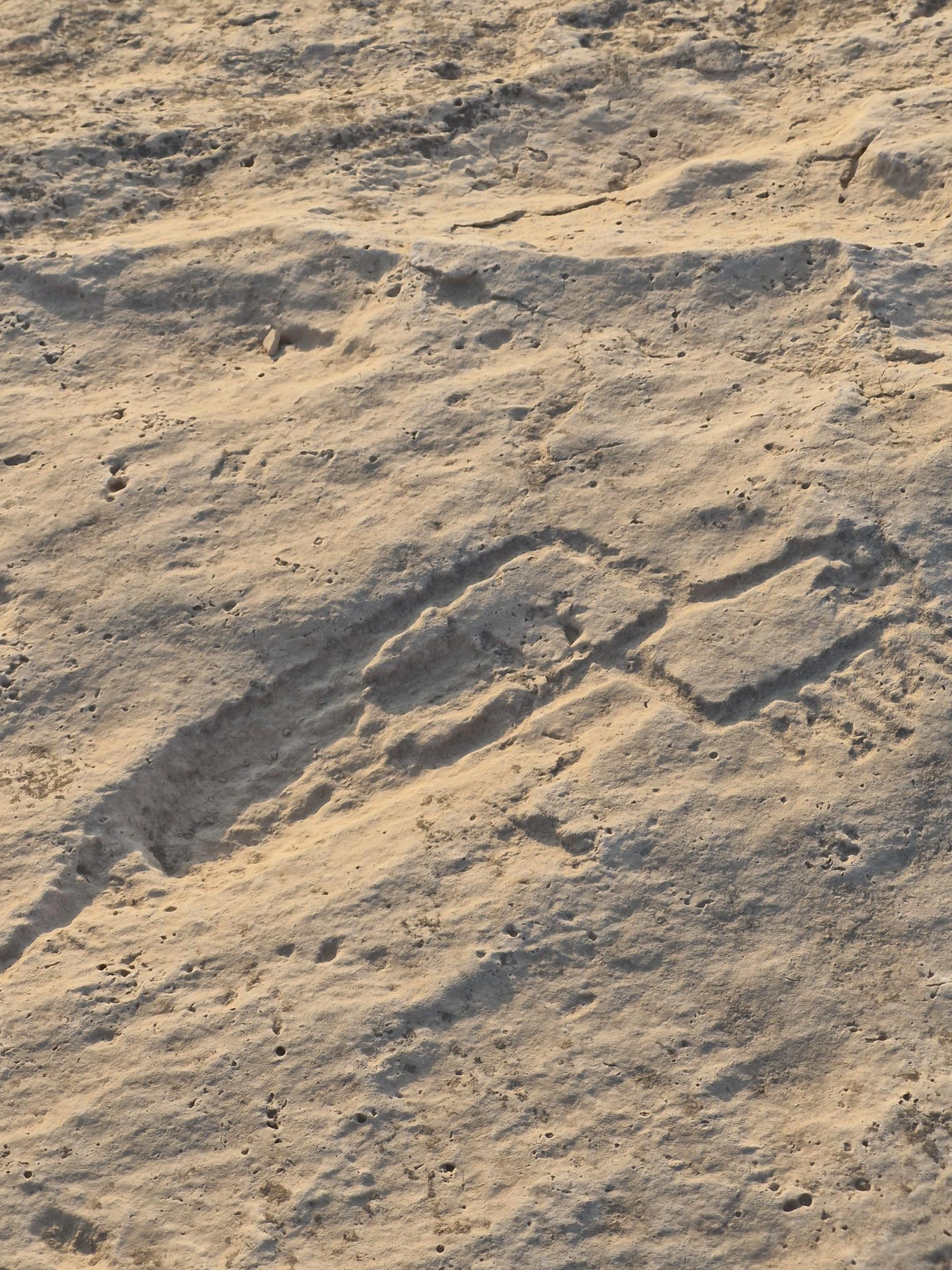
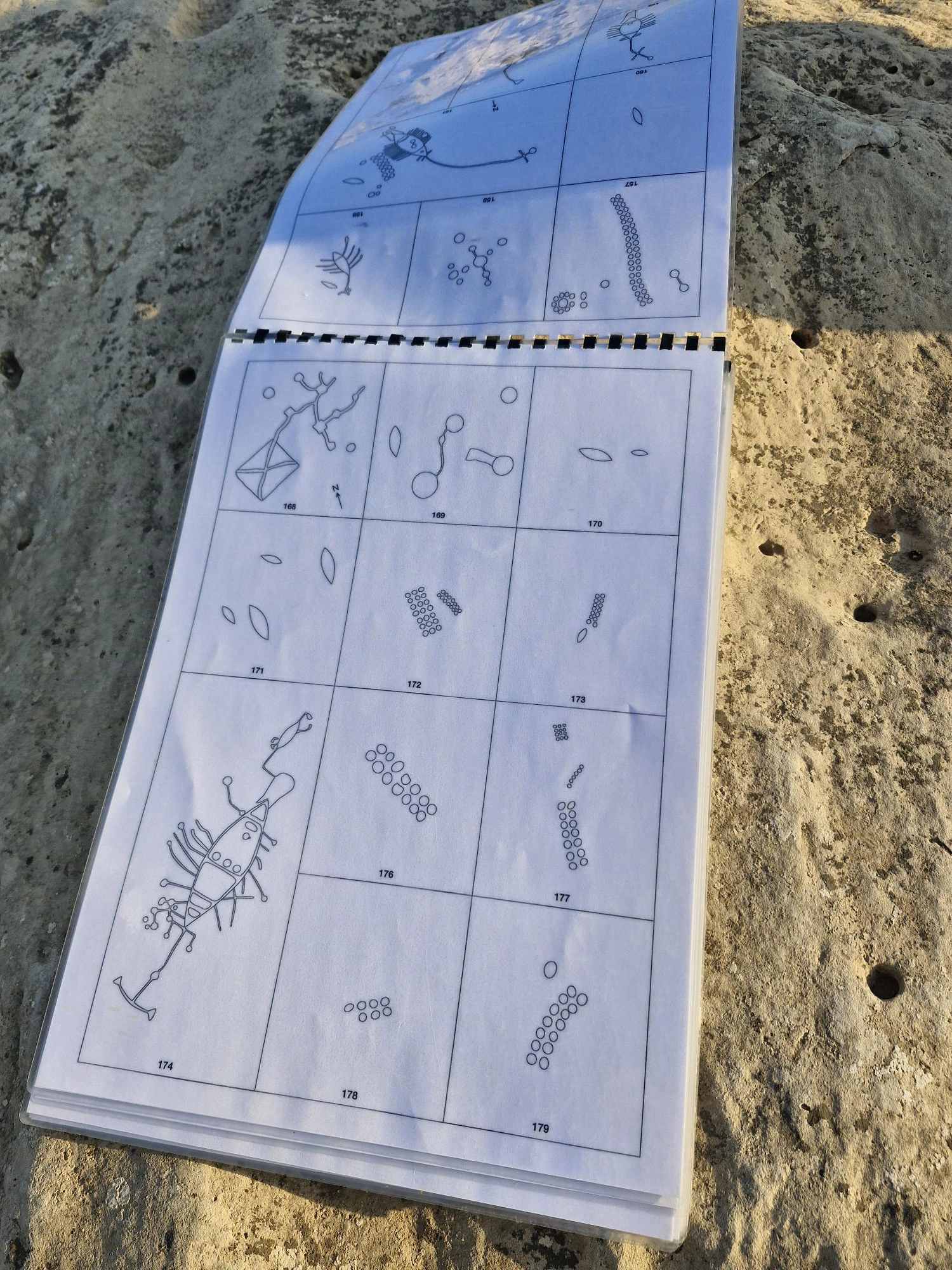
You will see rock carvings that depict images of human life such as footmarks and rosettes, important animals such as fish, ostriches and scorpions, and dozens of mysterious, cup-shaped indentations.
These can be viewed on either side of a road that runs through the 700m site.
The archeological site has been fenced off as part of ongoing efforts to preserve the artefacts and educate the public as to Qatar’s interesting past.
There are also petraglyphs of dhows, ancient sailing vessels which date back over 2000 years, but are still operational in Qatar today.
And, curiously some of these dhows are also captured in relief form, illustrated as if looking down from above on the wooden craft.
Such art work indicates “abstract thinking” on the part of the artist – something rarely captured in ancient rock art.
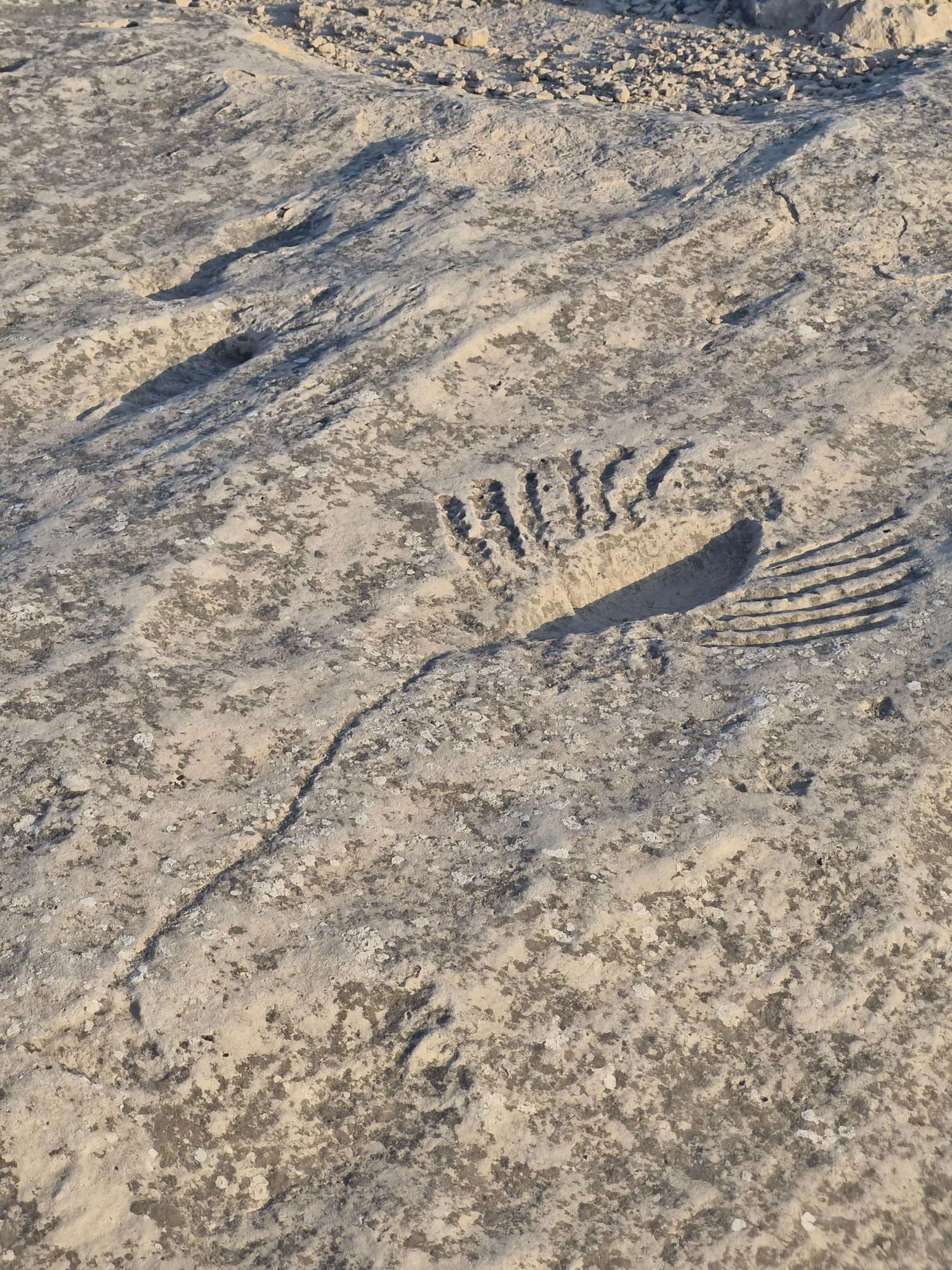
Qatar is the only place in the world that has rock carvings of dhows.
However, it is the proliferation of small patterned indentations that steals the rock art “mystery prize”.
‘World Cup’ of cups
These depressions or holes which are only a few centimetres wide and deep at the most are found elsewhere in Qatar and globally, but never in such numbers.
They are a mystery.
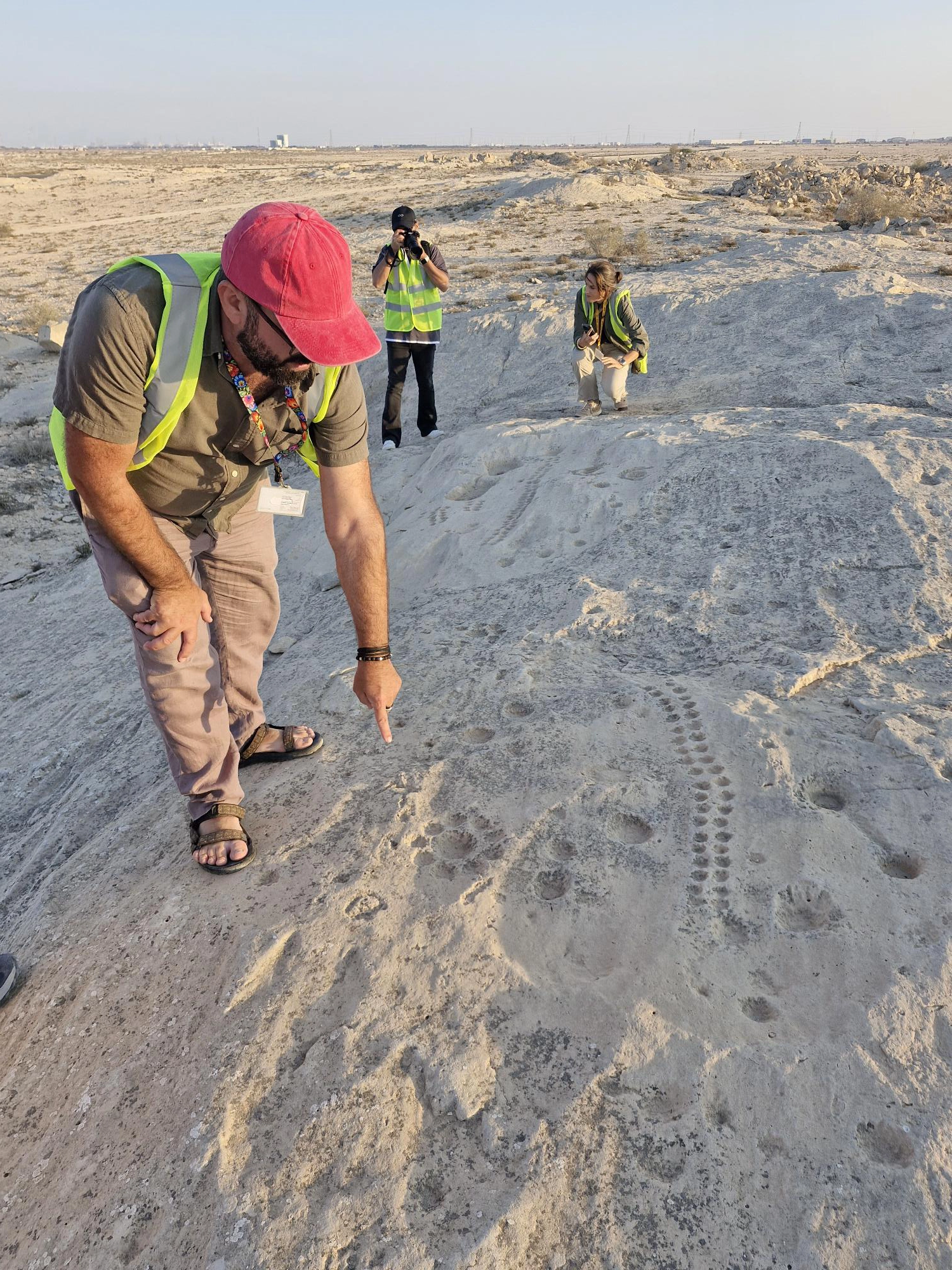
Those in-the-know think they were possibly carved to hold pearls, since Qatar traded in pearls until the 1940s, while others believe the patterned depressions could be an early version of a board game similar to mancala. But since so many of them are found on a slope, this is hard to imagine.
Or, perhaps they are simply the result of boredom.
Today, we doodle or scroll.
Back then, however, when there was nothing better to do, perhaps they made pretty patterns or did drawings on the limestone rocks?
Whatever they are, Al Jassasiya has the “world cup” of them, according to Dr Ferhan Sakal, Qatar Museums Authority’s Head of Survey and Excavation, who was on site for the photography walk-about.
There are hundreds of small cup-sized depressions right across the 700-metre site.
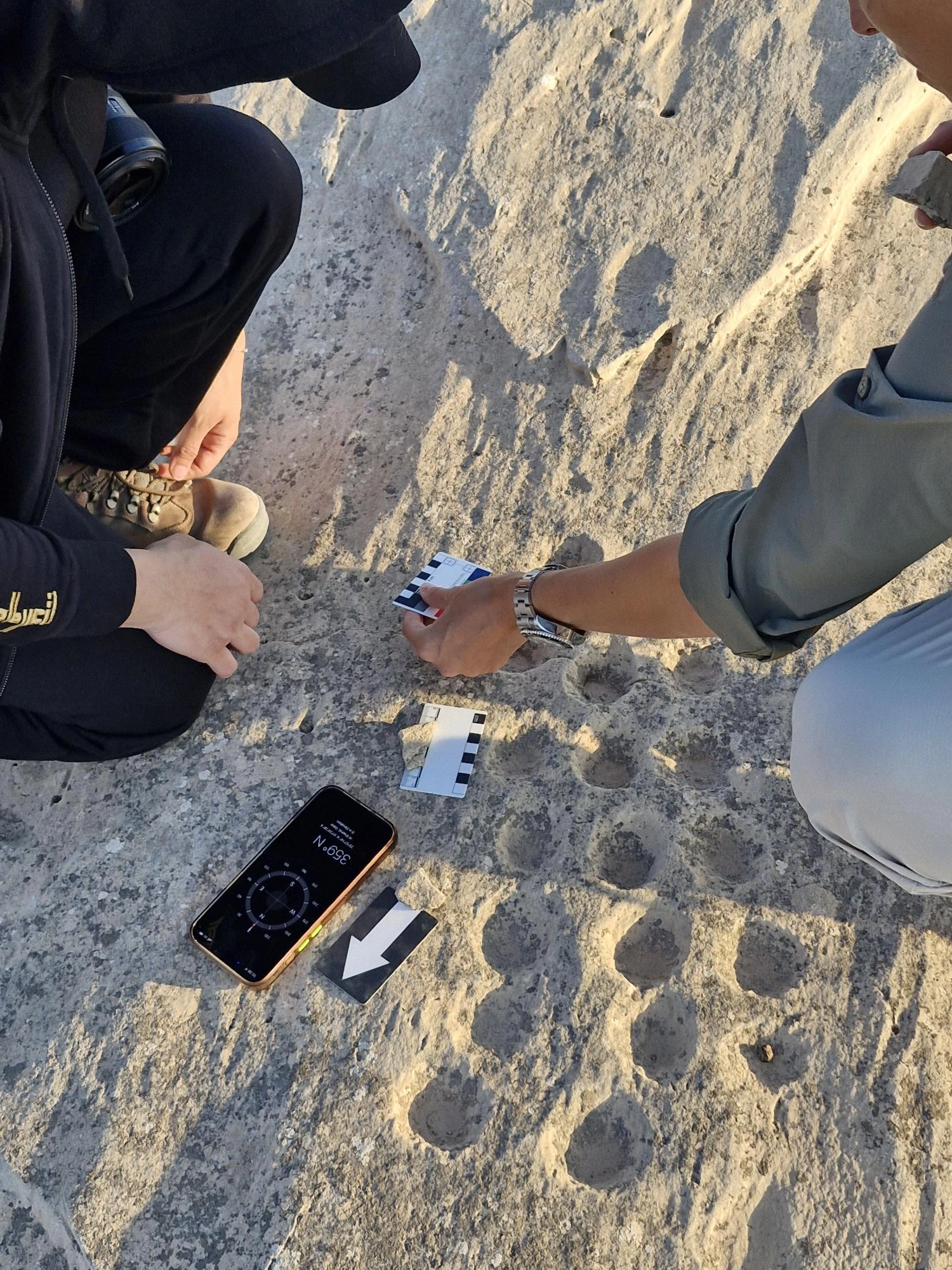
Some of the indentations or cups overlap; they are different sizes and are displayed in various patterns. Some, as shared, have been carved onto sloping outcrops.
In Qatar, the game involving such shapes, is known as Al Haloosa or Al Huwaila. It is still played today.
These indentations are an enigma as experts are still not sure of their origins.
Who found the carvings
The Al Jassasiya carvings were redisovered by Danish archaeologists in the 1950s but were only fully documented in 1974.
Even until very recently, the whereabouts of the petraglyphs were all but a secret. Apparently, only a few individuals with 4WD vehicles were able to find them and sadly, some of the carvings were lost when mining for limestone began in the area.
Today, archaeologists and other concerned organisation are intent on preserving the individual art forms – the carvings, indentataions and striations – and educating the public as to their importance.
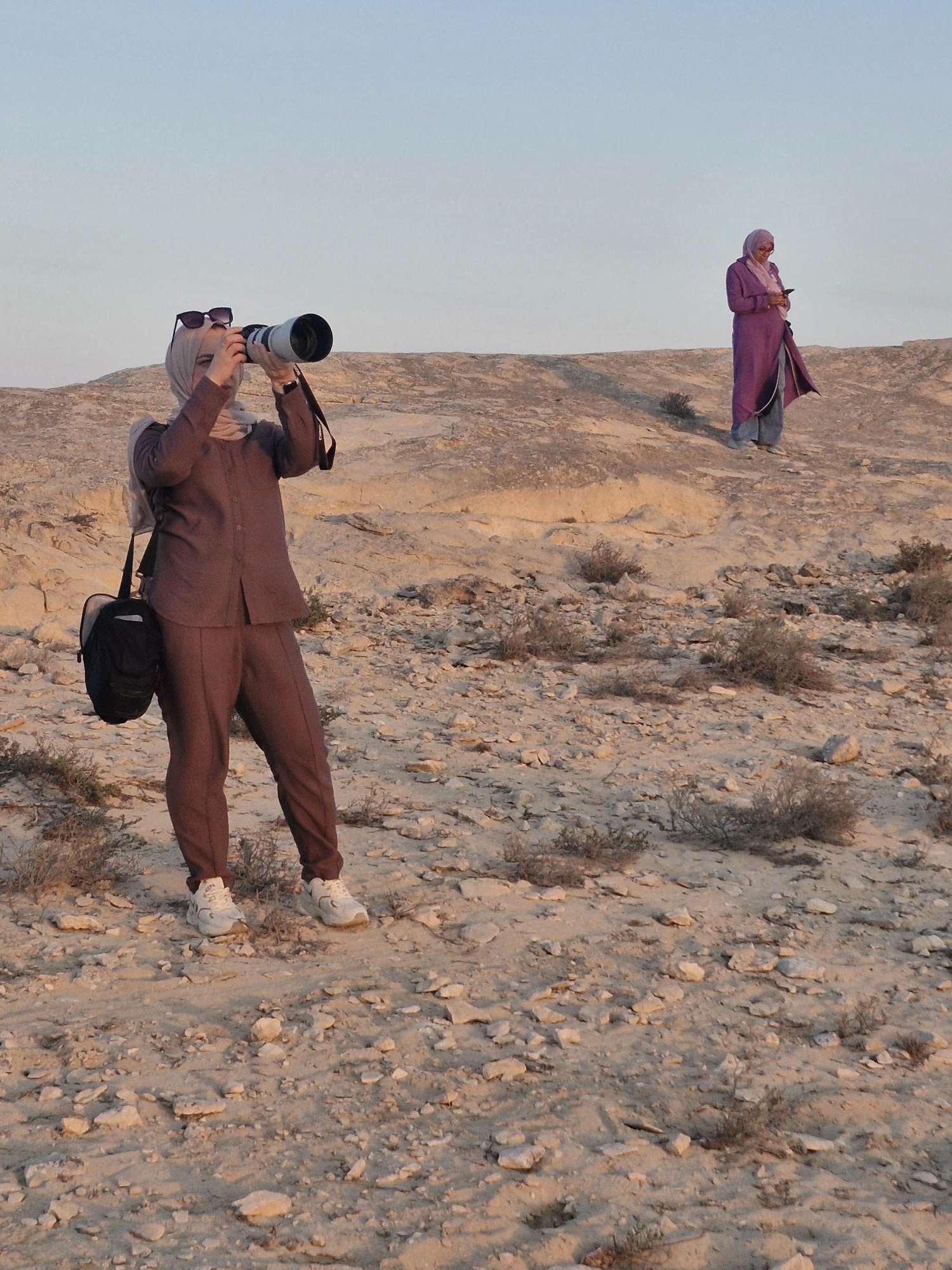
According to Dr Sakal, new rock art is still being discovered today, thanks, in part, to an ongoing citizen science project across the 13 identified sites in Qatar.
So, who knows? You could discover the next “new” petraglyph.
How old are the carvings?
The age of the rock carvings is another mystery. There is no simple answer to this question because rock carving is ongoing – even now man is still carving onto rocks.
There are claims that the oldest could date back to the Neolithic age, around 8000BC, but the 8th to 10th century AD is more likely. And, according to our guides, some are probably not more than 200 years old.
Since the carvings at the Al Jassasiya site contain so many novel design elements, it is also to difficult to make age comparisons with other sites.
Ancient Qatar
What we do know, however, is that in the 5th century BC, the Greek geographer and historian Herodotus referred to the seafaring Canaanites as the original inhabitants of Qatar.
According to Dr Google, the Greeks came to the Gulf with Alexander the Great and settled in Failaka in Kuwait, Bahrain, in the Emirate of Sharjah, and logged those ports that could be turned into profitable trading posts.
In the first century AD, Pliny the Elder, a Roman writer, used the word “Catharrei” to refer to the people who lived in this area.
Most of the country’s known history, however, dates from the 18th Century with flint spearheads, pottery shards and burials mounds found of the early inhabitation of Qatar (from 4000BC).
And, of course, the early occupants were bedouins, fishermen, or merchants trading with those who reached this Arabic peninsula.
For more on the history of Qatar and artefacts discovered, please visit the National Museum of Qatar.
Preserving the petraglyphs
Preserving rock art is challenging.
Like the nearby UNESCO archaeology site of Al Zubara, the arid conditions, weather and corrosive nature of sandstone at Al Jassasiya are a headache for those intent of saving this part of Qatar’s heritage.
Moulds of various artefacts have been captured, evidenced by the missing patina from some rocks at Al Jassasiya, and guides encourage visitors not to step on the rock art.
Each art work is again being photographed and scientifically documented.
Useful information
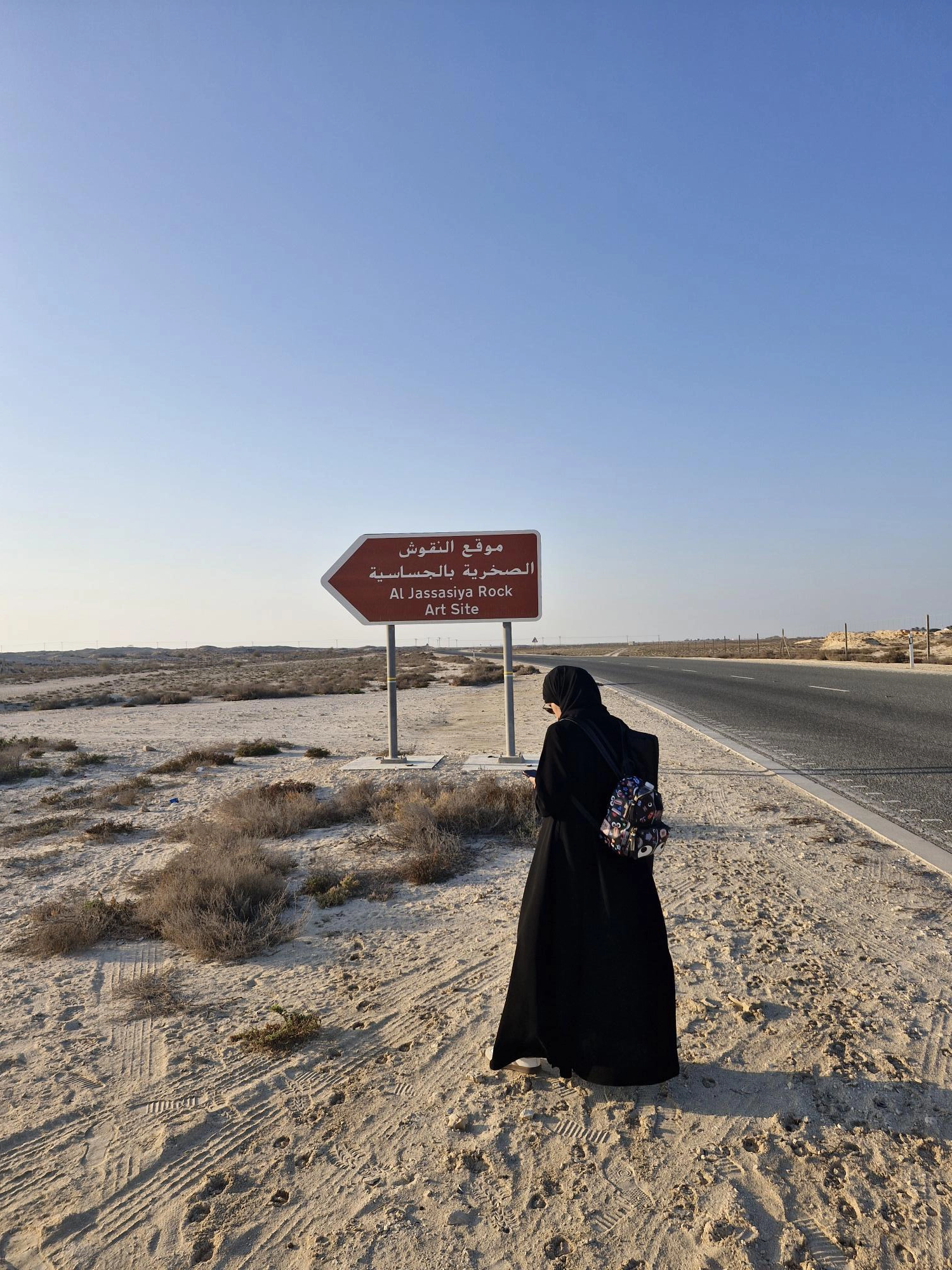
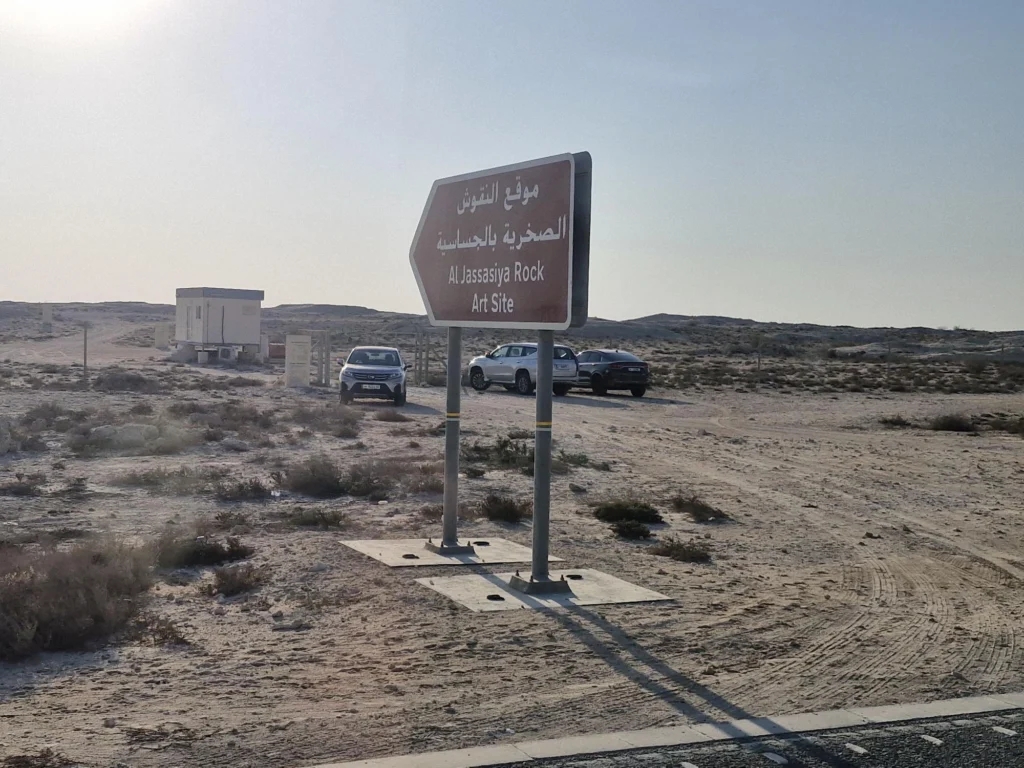
Arriving at the Al Jassisiya site is pretty underwhelming. If there were no signage, you’d be none the wiser, and drive past another open lot in the desert.
The site is open from Saturday to Thursday: 9am–5pm and on Fridays from 12.30 to 5pm.
Admission is free.
There are no toilets.
Wear good walking shoes, carry water and use suncream protection.
I would recommend a tour guide. Even though there is signage and excellent information about the carvings, a good guide can offer greater context as Dr Sakal and Margaux de Pauw, who is the Senior Heritage Activation Programming Co-ordinator at Qatar Museums. It was Margaux who organised the “photowalk” for aspiring photographers.
You should be a good citizen and refrain from touching or walking on the petroglyphs. And certainly do not remove anything from the archaelogical site.
Just take a photograph – and use it to educate others about this bygone era in Qatar’s history.
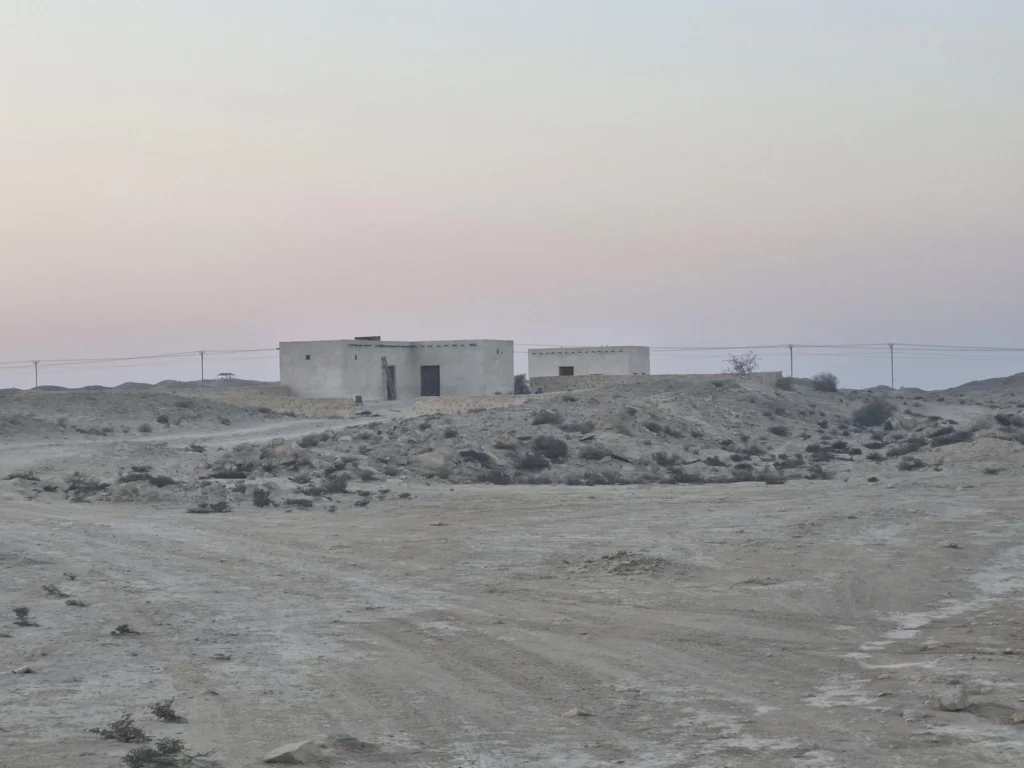
How to get there?
You can reach the Al Jassasiya rock art site via the Al Shamal Highway towards the north of Qatar.
Turn off at Exit 66 on the right. Continue until you reach an intersection at which you turn left. About 3km down the road, park in the demarcated area alongside the road and enter the site via the gates.
Here is the location from Google maps.

7 Responses
Oooohhhh very interesting!
Fascinating! Thanks for sharing, Debbie.
Interesting 🤔
Tysm for sharing .
One is never too old to learn, you sure lead an interesting life and experience so much.
This is magnificent and so interesting.Wow….we learn something new everyday.Debbie, you and Mark must be so enjoying this venture.I so enjoy reading all your blogs.
Super interesting absolutely amazing 🤗love your blogs … thxs for sharing
Interesting blog and topic… some friends just asked me to share it.