
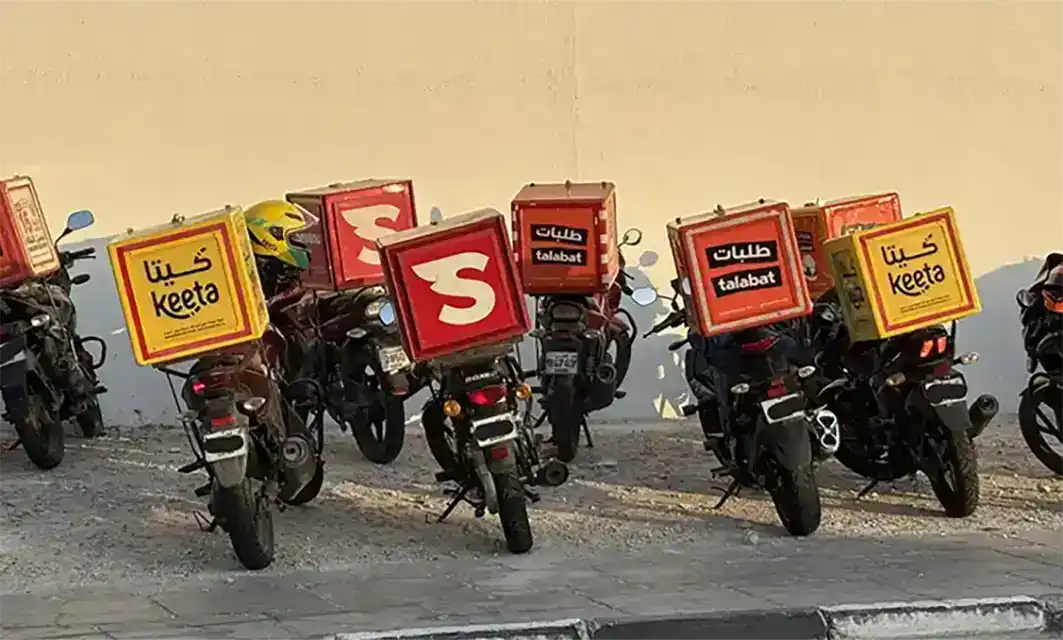
Be it groceries, fast food, flowers, or simply a cup of your favourite brew … it’s all but a click – and minutes – away in Doha, Qatar, thanks, in part, to fleets of two-wheel delivery whizzes.
These are the door-to-door delivery dynamos who navigate the city’s busy highways and byways in all weathers to deliver orders in a race against the clock.
I salute these two-wheeled warriors.
They are a special breed.
Beyond brave.
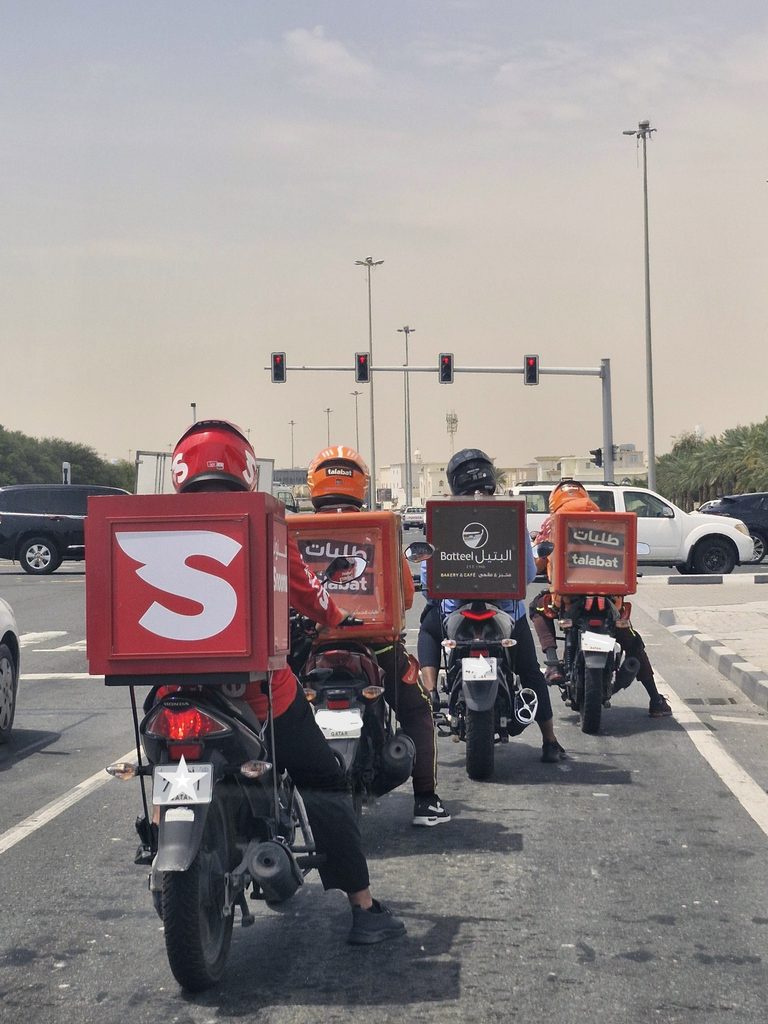
I mean, it’s not just the daily dodgems in the traffic, these delivery drivers often continue to crisscross the city as missiles and interceptors are doing likewise above our heads during times of conflict. (As you may remember, Qatar is caught in a war that is not theirs).
All to make your life a little more convenient.
But at what cost?
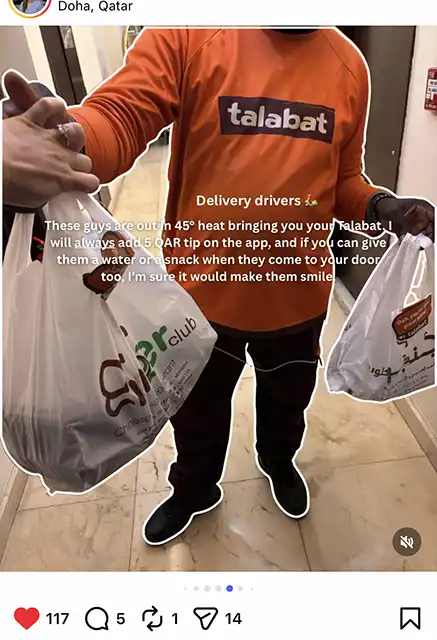
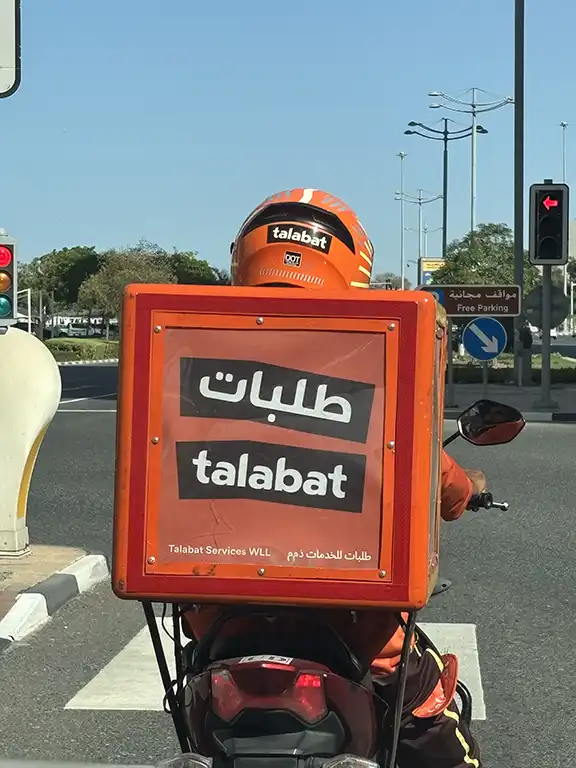
So, here’s my take on (and tribute to) the “Talabat Tribe” – the brave bikers, who often go undervalued by a growing customer base.
Expected convenience
These are customers, I might add, who sometimes take such service for granted in Qatar.
After almost five years of living here, I may be guilty as charged.
I confess I now expect Uber rides within minutes, doors to open automatically, groceries to be packed, our car to be washed while we shop and my home cleaned because that’s as life is for so many in Qatar.
(However, I have never ordered in food online which, in Qatar, makes us outliers!)
Convenience and Qatar are synonymous.
It’s expected.
Here laundry and water are also delivered. Beauty treatments, too. Even mobile pet grooming services come to you!
But for now, and for this post, we’ll focus on the food delivery service men (I have yet to see a woman on a bike) who make lives easier.
I mean, why cook a full meal at the end of a busy working day, when you can order it in?
(As you will learn, this may not be a rhetorical question.)
Keeping up with demand
But first some background.
Qatar may not offer the largest global delivery service, but it is among the fastest growing businesses.
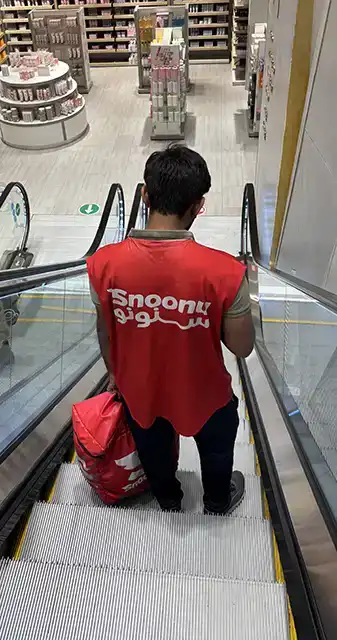
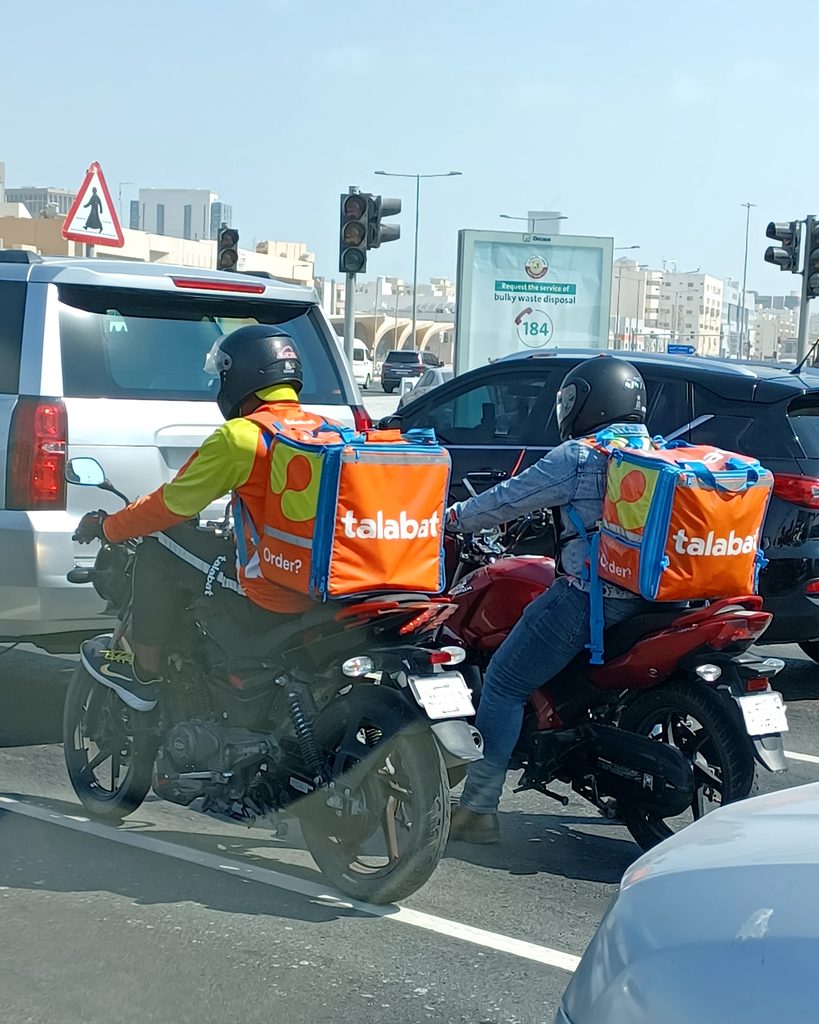
Certainly, we’ve noticed an increase in motorcyclists in their bright company livery in Doha in the past five years, as more people take advantage of door-to-door deliveries.
It was the global pandemic that gave the online service delivery industry a big nudge.
This, along with a generation comfortable using smartphones for online transactions; seamless payment processing; cashback, loyalty and rewards/discount programmes; search filters; social media integrations and the excellent food options …
It’s a massive industry.
In Qatar, the online food delivery services market is valued at USD16 billion, according to global strategy consulting firm Ken Research.
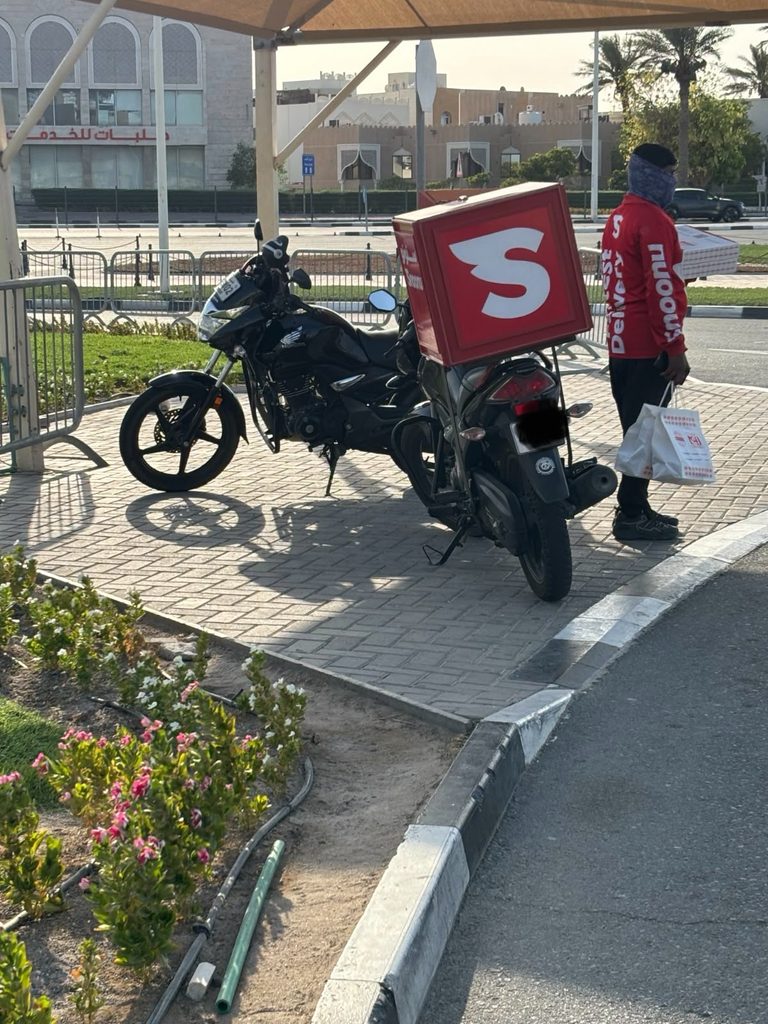
By the way, Thailand (Bangkok and Chaing Mai); Vietnam (highest concentration of motorbikes in the world) with its speed of services and China (electric scooters) lead the food delivery business.
They are followed by the Gulf countries, including Qatar with its unmatched convenience and massive selection of international food!
Spoilt for choice
In Qatar, we are spoilt for choice.
With up to 150 different nationalities living here, we can literally eat around the world without leaving Doha.
In fact, as you have already assessed, you do not even have to leave your house to eat your favourite foreign fare, inclusive of treats from home. Nandos is hugely popular here.
Equally, in Qatar, we are spoilt for choice when it comes to delivery service choices.
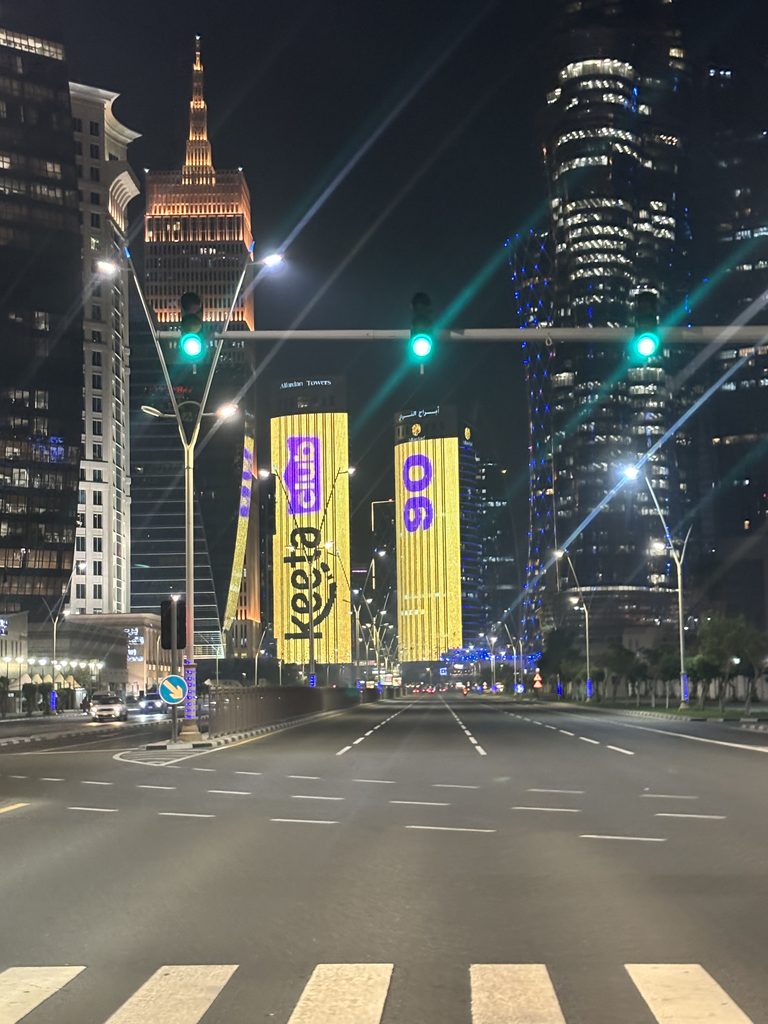
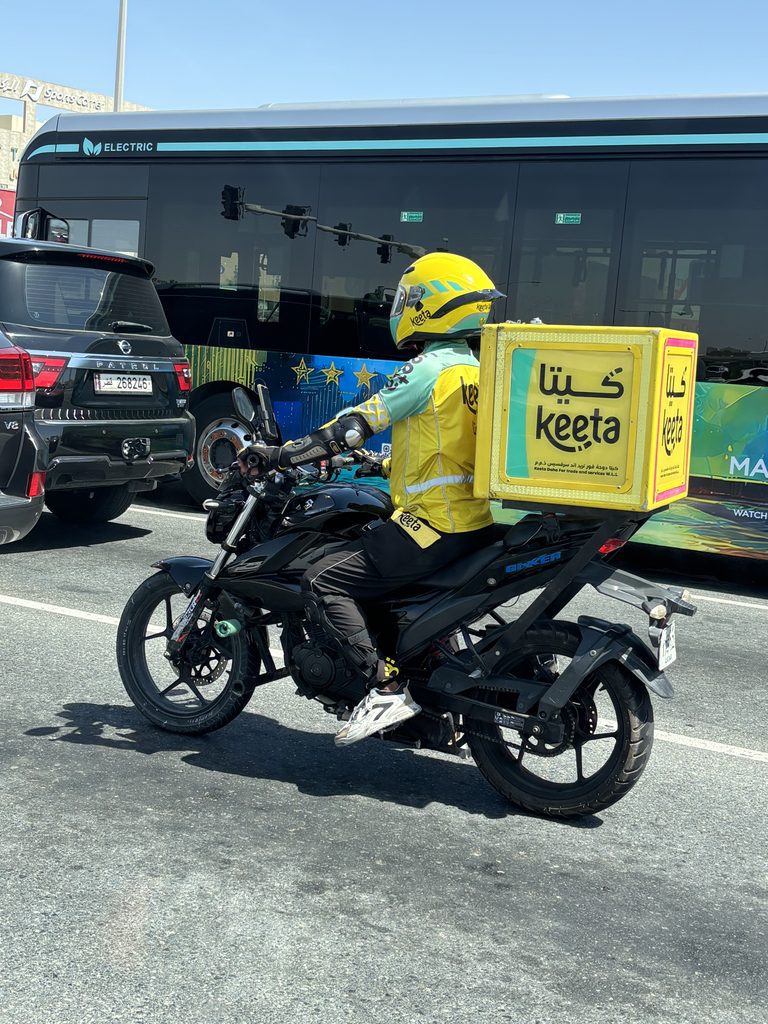
The most noticeable fast food service delivery businesses here are Talabat, Rafeeq, Snoonu, and newcomers Keeta, the Chinese-based company who painted the city yellow about a year ago.
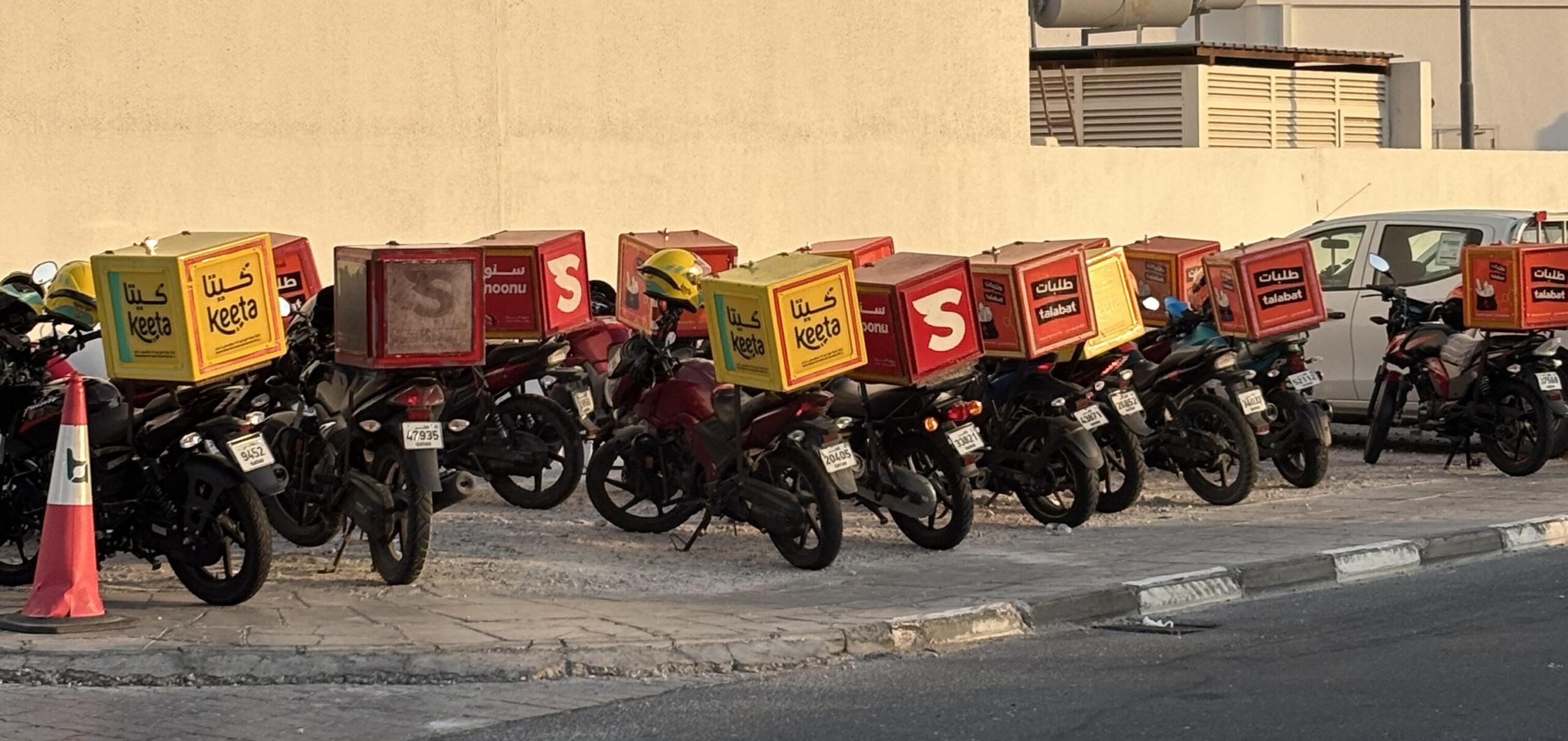
Talabat was introduced to Qatar in 2013. It came to us from Kuwait. Rafeeq and Snoonu are both Qatari-owned delivery platforms.
But there’s also Carriage, Zomato, Delieveroo, Akly, Fingertips, Rafiki, Jeeb, Mrsool, Careem NOW, Uber Eats, Foodak and EatEasy.
You see, spoilt for choice.
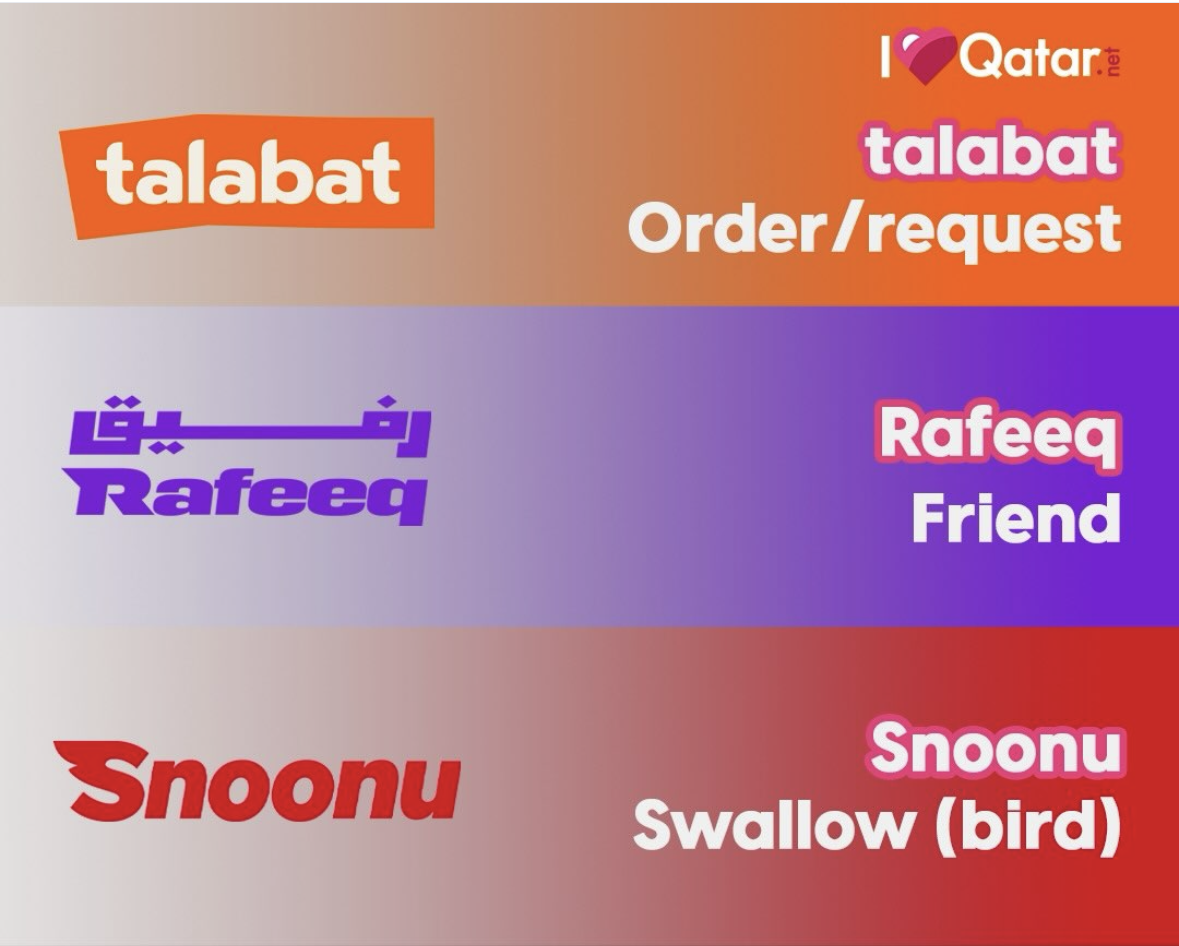
The delivery drivers
The drivers themselves come from the world over, though the majority appear to come from Africa and Asia.
Expectations of drivers are high.
Apart from having the correct driving licence, work permit and Qatar ID, you need a smartphone, a food handling certificate, good geographical knowledge, customer service skills and be physically fit.
And brave.
You must be able to lift heavy parcels of up to 25kg, work in extreme temperatures and navigate demanding traffic. This includes avoiding those who indulge in the Doha drift – a four-lane shift without indication!
It’s a big ask for salaries of about QAR4000 to 4500 which, at the present exchange rate, is R17 500 to R20000.
Working hours
Qatar’s Ministry of Labour strictly bans motorcycle deliveries from 10am to 3.30pm every summer – 1 June to 15 September when delivery companies must use cars only. It’s just too darn hot!
Outdoor work must also stop if heart stress levels exceed established limits.
Drivers must be provided with air-conditioned, shaded waiting areas and free drinking water while they wait for orders.
While there are mandatory health and safety protocols in place, there’s no avoiding the many dangers that come with the job.
Delivery driver accidents
I don’t have actual numbers, but I have witnessed enough accidents to know being a delivery driver can be dangerous.
In 2022, Hamad Medical Corporation reported that accidents had surged, driven by the boom in door-to-door deliveries.
Driver fatigue and distraction, deadlines, long hours, use of navigation apps and dangerous driving habits such as weaving through the traffic and ignoring basic rules of the road were highlighted as likely contributors.
The costs
Of course, all the competition – with up to 10 major players vying for market share – benefits the customers.
There are always special deals – with delivery companies and their partner restaurants.

So, the financial cost of ordering in is not particularly exorbitant in what is one of the wealthiest countries in the world.
Ordering a half chicken with a regular side from Nando’s in Doha for two, for example, costs about QAR90 (that’s about R360).
But what of other costs?
The cost of changed lifestyles?
Fast food is rarely healthy.
Over 70% of the population in Qatar is affected by overweight or obesity, according to data from the Ministry of Public Health STEPwise Survey.
In fact, about 41% to 44% of adults are clinically obese.
Such convenience also makes us lazy, and therefore, less active.
And finally, what about the cost of health of the delivery drivers?
Just some food for thought.

5 Responses
Fascinating. Thanks for sharing, Debbie.
Thanks for sharing, the number of two wheel deliveries has increased in the four years I have been in Cape Town, mainly for food shopping. Love to you both xx
Debbie
This is so interesting.
Take care & regards to you & Mark.
Such an interesting article Debbie.The delivery drivers must be so clued up on all the different locations and bravely negotiating all the traffic!! How times have changed!!
Always interesting to read, we are in USA visiting our family